
Thalidomide
This agent was introduced in Europe in 1957 and 1958 and, based on animal tests then commonly used, was promoted as a 'nontoxic' hypnotic. In 1961, the first reports were published suggesting that thalidomide was responsible for a dramatic increase in the incidence of a rare birth defect called phocomelia, a condition involving shortening or complete absence of limbs. Because of this association the drug was withdrawn from sale worldwide. Thalidomide is now a well-established agent for treating refractory or relapsed multiple myeloma. Recently it has been used in combination with dexamethasone, and proved effective in palliating symptoms.
Primary Characteristics
It is of Synthetic origin.
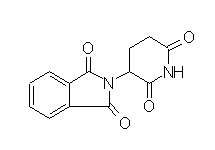
Molecular Weight: 258.2 · Solubility in Water: sparingly · Solubility in Alcohol: Insoluble · Non-proprietary name: Thalidomide.
Pharmacokinetics
Distribution: Thalidomide has a volume of distribution is 120.69 -/+ 45.36. plasma protein binding is not known.
Elimination: plasma half-life is 8.7 hr, renal excretion is 0.6 +/- 0.2 % unchanged.
Advertisement
Indications
Thalidomide is primarily indicated in conditions like Graft versus host disease, Hypnotic, Insomnia, Leprosum, Lupus erythematosus, Orogenital ulceration, Sedative.
Contraindications
Thalidomide is contraindicated in conditions like Pregnancy.
Dosage
Thalidomide's dosage details are as follows:
| Dose | Single Dose | Frequency | Route | Instructions |
|---|---|---|---|---|
| Adult Dosage | ||||
| 200 mg | 200 mg | Every 24h | PO | Multiple Myeloma: Should be taken with water, preferably at bedtime and at least 1-hour after the evening meal. |
| Paediatric Dosage (20kg) | ||||
| No data. | ||||
| Neonatal Dosage (3kg) | ||||
| No data. | ||||
Drug Interactions
Always consult your physician for the change of dose regimen or an alternative drug of choice that may strictly be required.
Side Effects
Thalidomide produces potentially life-threatening effects which include Neurological disturbances, Phocomelia. Careful monitoring is needed with proper medical management.
Thalidomide is known to cause more or less tolerable side effects which are usually transient. These include Constipation , Increased plasma triglycerides, Menstrual irregularity, Myxedema, Nausea, Rashes , Xerostomia .
Warnings / Precautions
Interference in Pathology
Thalidomide may interfere in the diagnosis of Liver Function Test (LFT) , Increased Alkaline Phosphatase Levels, Increased in serum creatinin.
Available Brands
Storage Conditions
Drug Classification
- 1.24.3 — Drugs used in anxiety and sleep disorders
Manufacturers
Manufacturers of Thalidomide in Pakistan: