
Dicloxacillin (Na)
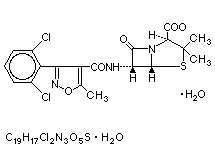
Dicloxacillin (Na) is a semisynthetic penicillinase-resistant penicillin. Dicloxacillin (Na) is an agent of choice for most staphylococcal infections.
Primary Characteristics
It is of Semi Synthetic origin and belongs to Penicillin.
Molecular Weight: 510.3 · Solubility in Water: freely soluble · Solubility in Alcohol: soluble · Non-proprietary name: Dicloxacillin (Na) · pH: 5.
Pharmacokinetics
Distribution: Dicloxacillin (Na) has a volume of distribution is 0.017l/kg. plasma protein binding is 97%.
Elimination: plasma half-life is 0.5 - 1 hr, renal excretion is 60%.
Advertisement
Indications
Dicloxacillin (Na) is primarily indicated in conditions like Bone and joints infections, Bronchitis, Cellulitis, Lower respiratory tract infections, Pharyngitis, Pneumonia, Skin infections, Staphlococcal infections, Staphylococcal infections, Upper respiratory tract infections, Urinary tract infection.
Contraindications
Dicloxacillin (Na) is contraindicated in conditions like Hypersensitivity to the drug.
Dosage
Dicloxacillin (Na)'s dosage details are as follows:
| Dose | Single Dose | Frequency | Route | Instructions |
|---|---|---|---|---|
| Adult Dosage | ||||
| 0 – 0 | — | — | IV | Doses may be doubled in severe infections. |
| 250 mg | 250 mg | Every 4h | PO | Oral doses should be taken at least 1 hour before and 2 hours after meals. |
| Paediatric Dosage (20kg) | ||||
| No data. | ||||
| Neonatal Dosage (3kg) | ||||
| No data. | ||||
Drug Interactions
Always consult your physician for the change of dose regimen or an alternative drug of choice that may strictly be required.
Side Effects
Dicloxacillin (Na) in overdosage may give rise to further complications which include Hepatitis , Cholestatic jaundice , Pseudomembranous colitis , Stevens johnson syndrome , Epidermal necrolysis , Gi bleeding .
Dicloxacillin (Na) is known to cause more or less tolerable side effects which are usually transient. These include Abdominal pain, Bullous rash, Diarrhea, Elevation of liver enzymes, Maculopapular rash, Nausea, Phlebitis , Urticaria, Vasculitis, Vomiting .
Warnings / Precautions
Interference in Pathology
Dicloxacillin (Na) may interfere in the diagnosis of Creatinine determination by Alkaline Picrate Method , Abnormal LFTs .
Available Brands
None recorded.
Storage Conditions
Drug Classification
- 1.6.2.1.1 — Penicillins