
Fosphenytoin
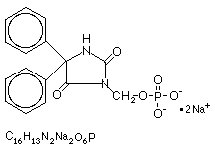
Fosphenytoin is a prodrug of phenytoin can be given more rapidly and causes fewer injection site reactions, when given intravenously (IV) than phenytoin. It can also be given intramuscularly (IM). Fosphenytoin is used in the treatment of status epilepticus and seizures associated with neurosurgery or head injury; when phenytoin by mouth not possible.
Primary Characteristics
It is of Synthetic origin.
Molecular Weight: 406.2 · Solubility in Alcohol: Freely soluble · Non-proprietary name: Fosphenytoin.
Pharmacokinetics
Distribution: Fosphenytoin has a plasma protein binding is 95 - 99 %.
Elimination: plasma half-life is 15 min.
Advertisement
Indications
Fosphenytoin is primarily indicated in conditions like Epilepsy, Head injury, Seizures, Status epilepticus, Trauma.
Contraindications
None recorded.
Dosage
Fosphenytoin's dosage details are as follows:
| Dose | Single Dose | Frequency | Route | Instructions |
|---|---|---|---|---|
| Adult Dosage | ||||
| 15 – 0 mg/kg | — | — | IV | Status Epilepticus: Initial/Loading dose |
| 5 mg/kg | 5 mg/kg | — | IV/IM | Seizures other than status epilepticus |
| 15 mg/kg | 15 mg/kg | — | IV/IM | For siatus epileptiars |
| Paediatric Dosage (20kg) | ||||
| No data. | ||||
| Neonatal Dosage (3kg) | ||||
| No data. | ||||
Drug Interactions
Always consult your physician for the change of dose regimen or an alternative drug of choice that may strictly be required.
Side Effects
Fosphenytoin is known to cause more or less tolerable side effects which are usually transient. These include Burning, Hypotension , Itching, Paresthesias.
Warnings / Precautions
Interference in Pathology
Fosphenytoin may interfere in the diagnosis of Increased Alkaline Phosphatase Levels, Increased blood glucose level.
Available Brands
None recorded.
Storage Conditions
Drug Classification
- 1.5 — Anticonvulsants and Antiepileptics