
Oxycodone
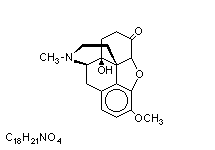
Oxycodone is a phenantherne derivative with opiod analgesic activity similar to morphine but adverse effects are milder than those of morphine. Oxycodone is used to control moderate to severe pain, including postoperative, postextractional, and postpartum pain. it, and other opiates such as morphine and codeine act as agonists at opiate receptors within the central nervous system (CNS). Opiate receptors include µ (mu), ? (kappa), d (delta), and s (sigma) and function as inhibitory modulators of synaptic transmission in both the CNS and the myenteric plexus.Clinically, stimulation of µ and ? receptors produces analgesia, euphoria, respiratory depression, miosis, decreased gastrointestinal motility, and physical dependence. It was approved by the FDA in 1976 and is a schedule C-II controlled substance.
Primary Characteristics
Oxycodone is also known as Oxycodone Terephthalate.
It is of Synthetic origin.
Molecular Weight: 351.8 · Solubility in Water: soluble · Solubility in Alcohol: slighty · Non-proprietary name: Oxycodone.
Pharmacokinetics
None recorded.
Advertisement
Indications
Oxycodone is primarily indicated in conditions like Moderate to moderately severe pain, Moderate to severe pain.
Contraindications
Oxycodone is contraindicated in conditions like Peptic ulcer, Platelet dysfunction, Liver damage, Bleeding, Hypersensitivity to the drug.
Dosage
None recorded.
Drug Interactions
Always consult your physician for the change of dose regimen or an alternative drug of choice that may strictly be required.
Side Effects
Oxycodone in overdosage may give rise to further complications which include Hallucinations , Anaphylactic reactions .
The signs and symptoms that are produced after acute overdosage of Oxycodone are Pulmonary edema , Convulsions , Coma, Respiratory depression, Respiratory depression, Renal failure.
Oxycodone is known to cause more or less tolerable side effects which are usually transient. These include Confusion, Constipation , Dizziness, Drowsiness, Dry mouth, Nausea and vomiting, Restlessness.
Warnings / Precautions
Available Brands
None recorded.
Storage Conditions
Drug Classification
- 1.2.2 — Opioid analgesics