
Canrenoate (K)
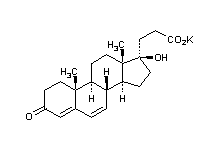
Canrenoate (K) is a potassium-sparing diuretic with action and uses similar to those of spironolactone. Canrenoate (K) is used in the treatment of refractory oedema associated with heart failure or hepatic disease.
Primary Characteristics
It is of Synthetic origin and belongs to Carboxylic acid lactone.
Molecular Weight: 396.2 · pKa: 5.2 · Solubility in Water: soluble · Solubility in Alcohol: soluble · Non-proprietary name: Canrenoate (K).
Pharmacokinetics
Distribution: Canrenoate (K) has a plasma protein binding is 98%.
Elimination: plasma half-life is 10-35 hr, renal excretion is 88%.
Advertisement
Indications
Canrenoate (K) is primarily indicated in conditions like Magnesium deficiency, Oedema with secondary aldosteronism, Potassium deficiency, Primary hyperaldosteronism.
Contraindications
Canrenoate (K) is contraindicated in conditions like Hyperkalaemia, Renal impairment.
Dosage
None recorded.
Drug Interactions
Always consult your physician for the change of dose regimen or an alternative drug of choice that may strictly be required.
Side Effects
Canrenoate (K) in overdosage may give rise to further complications which include Change in voice, Hyperkalemia .
The signs and symptoms that are produced after acute overdosage of Canrenoate (K) are Nausea, Vomiting, Hallucinations , Hyperkalemia, Restlessness , Transient confusion.
Canrenoate (K) is known to cause more or less tolerable side effects which are usually transient. These include Gynecomastia, Menstrual irregularity, Pain at injection site.
Warnings / Precautions
Interference in Pathology
Canrenoate (K) may interfere in the diagnosis of Measurement of Serum Digoxin by Immunoassay. .
Available Brands
None recorded.
Storage Conditions
Drug Classification
- 1.16.3 — Potassium sparing diuretics