
Apomorphine
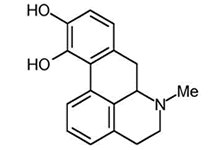
Apomorphine is a morphine derivative and a potent dopamine D2 receptor agonist. Apomorphine is used parenterally for the treatment of parkinsonism, especially in advanced disease, for patients experiencing unpredictable "off " periods with levodopa treatment. It stimulates chemoreceptor trigger zone in the brain and can produce vomiting within a few minutes after administration. Specialist supervision is advisable throughout it treatment. Apomorphine is also used in the management of eractile dysfunction.
Primary Characteristics
It is of Synthetic origin and belongs to Quinoline.
Molecular Weight: 625.6 · pKa: 7.2, 8.9 · Solubility in Water: 1 in 50 · Solubility in Alcohol: 1 in 50 · Non-proprietary name: Apomorphine.
Pharmacokinetics
Distribution: Apomorphine has a volume of distribution is 2 l/kg.
Elimination: plasma half-life is 33 min.
Advertisement
Indications
Apomorphine is primarily indicated in conditions like Erectile dysfunction, Parkinsonism, Parkinson's disease, Refractory motor fluctuations in parkinson`s disease.
Contraindications
Apomorphine is contraindicated in conditions like Respiratory disease, Opioid dependence, Cardiac disease.
Dosage
None recorded.
Drug Interactions
Always consult your physician for the change of dose regimen or an alternative drug of choice that may strictly be required.
Side Effects
Apomorphine in overdosage may give rise to further complications which include Delayed psychosis.
Apomorphine produces potentially life-threatening effects which include Uremia, Asystole . Careful monitoring is needed with proper medical management.
The signs and symptoms that are produced after acute overdosage of Apomorphine are Acute psychosis, Postural hypotension, Peripheral vasodilation, Protracted vomiting.
Apomorphine is known to cause more or less tolerable side effects which are usually transient. These include Edema, Hallucination , Reaction at injection site.
Warnings / Precautions
Available Brands
None recorded.
Storage Conditions
Drug Classification
- 1.9.1 — Drugs used in parkinsonism