
Amoxapine
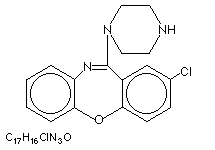
Amoxapine is a tricyclic antidepressant, with actions, adverse effects similar to that of amitriptyline. Amoxapine is one of the less sedating tricyclic and its antimuscarinic effects are mild. It inhibits reuptake of dopamine, noradrenalineand serotonin at the neuronal membrane. Onset of action appears to be more rapid than that of amitriptyline or imipramine. It was approved by FDA in 1980
Primary Characteristics
It is of Synthetic origin and belongs to Oxazepine.
Molecular Weight: 313.8 · pKa: 7.2-7.8 · Solubility in Water: 1 in 600 · Solubility in Alcohol: 1 in 100 to 1 in 200 · Non-proprietary name: Amoxapine.
Pharmacokinetics
Absorption: Amoxapine has an oral bioavailability is 47.5% (±47.5%), pre-systemic (first-pass) metabolism accounts for 32.5% (±32.5%).
Distribution: Amoxapine has a volume of distribution is 1148 litre. plasma protein binding is 90%.
Elimination: plasma half-life is 8.3-14.1 hr, renal excretion is < 5% (unchanged).
Advertisement
Indications
Amoxapine is primarily indicated in conditions like Depression.
Contraindications
Amoxapine is contraindicated in conditions like Cardiac arrhythmia, Epilepsy, Mania, Myocardial infarction, Heart block, Narrow-angle glaucoma, Urinary retention.
Dosage
Amoxapine's dosage details are as follows:
| Dose | Single Dose | Frequency | Route | Instructions |
|---|---|---|---|---|
| Adult Dosage | ||||
| 250 mg/day | 250 mg/day | — | PO | Three weeks constitutes an adequate period of trial providing dosage has reached 300 mg daily (or lower level of tolerance) for at least two weeks. If no response is seen at 300 mg, dosage may be increased, depending upon tolerance, up to 400 mg daily. Hospitalized patients who have been refractory to antidepressant therapy and who have no history of convulsive seizures may have dosage raised cautiously up to 600 mg daily in divided doses. Amoxapine may be given in a single daily dose, not to exceed 300 mg, preferably at bedtime. If the total daily dosage exceeds 300 mg, it should be given in divided doses. |
| Paediatric Dosage (20kg) | ||||
| No data. | ||||
| Neonatal Dosage (3kg) | ||||
| No data. | ||||
Drug Interactions
Always consult your physician for the change of dose regimen or an alternative drug of choice that may strictly be required.
Side Effects
Amoxapine in overdosage may give rise to further complications which include Extrapyramidal symptoms, Tardive dyskinesia , Seizures .
Amoxapine produces potentially life-threatening effects which include Agranulocytosis, Neuroleptic Malignant Syndrome , Epidermal necrolysis, Acute hepatitis. Careful monitoring is needed with proper medical management.
The signs and symptoms that are produced after acute overdosage of Amoxapine are Hypotension, Coma, Seizures, Renal failure, Drowsiness, Rhabdomyolysis , Acute tubular necrosis.
Amoxapine is known to cause more or less tolerable side effects which are usually transient. These include Anorgasmia in women, Blurred vision, Cardiac arrhythmias , Clouding of consciousness, Constipation , Dry mouth, Erectile impotence, Hallucination , Hyperprolactinemia, Nasal stiffiness, Postural hypotension, Reflex tachycardia, Urinary hesitancy.
Warnings / Precautions
Available Brands
None recorded.
Storage Conditions
Drug Classification
- 1.24.2.1 — Drugs used in depression