
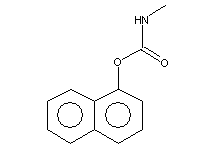
Carbaryl
Carbaryl is anticholinesterase. Carbaryl is used topically as an insecticide for lice.
Primary Characteristics
It is of Synthetic origin and belongs to Carbamate.
It belongs to Cholinestrase inhibitor pharmacological group on the basis of mechanism of action and also classified in Antiparasitic pharmacological group.
Molecular Weight: 201.2 · Solubility in Water: < 1 in 10000 · Solubility in Alcohol: > 1 in 30 · Non-proprietary name: Carbaryl.
Pharmacokinetics
Elimination: renal excretion is major.
Advertisement
Indications
Carbaryl is primarily indicated in conditions like Head lice, Pubic lice.
Contraindications
None recorded.
Dosage
Carbaryl's dosage details are as follows:
| Dose | Single Dose | Frequency | Route | Instructions |
|---|---|---|---|---|
| Adult Dosage | ||||
| 0.5 % | 0.5 % | — | Topical | As Required |
| Paediatric Dosage (20kg) | ||||
| 0.5 % | 0.5 % | — | Topical | As Required |
| Neonatal Dosage (3kg) | ||||
| 0.5 % | 0.5 % | — | topical | As required, Not recommended under 6 months |
Drug Interactions
None recorded.
Side Effects
The signs and symptoms that are produced after acute overdosage of Carbaryl are Nausea, Headache, Abdominal cramps, Vomiting, Dimness of vision.
Carbaryl is known to cause more or less tolerable side effects which are usually transient. These include Skin irritation.
Warnings / Precautions
Available Brands
None recorded.
Storage Conditions
Drug Classification
- 1.13.6 — Scabicides & pediculocides