
Carbamazepine
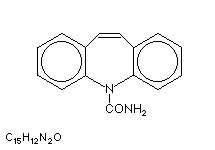
Carbamazepine is a dibenzapine derivative with antiepileptic and anticonvulsant properties. Carbamazepine is closely related to Imipramine and other antidepressants. Carbamazepine is a tricyclic compound effective in the treatment of bipolar effective disoredrs. It was initally marketed for the treatment of trigeminal neuralgia but has proved useful for epilepsy as well. Carbamazepine is now used as a drug of choice for simple and complex partial seizures and for tonic clonic seizures. It is also used for the management of certain types of nerve pain.
Primary Characteristics
It is of Synthetic origin and belongs to Carboxamide.
It belongs to Na-Channel Antagonist pharmacological group on the basis of mechanism of action.
Solubility in Water: Negligible · Solubility in Alcohol: 1 in 10 · Non-proprietary name: Carbamazepine.
Pharmacokinetics
Absorption: Carbamazepine has an oral bioavailability is 84% (±12%).
Distribution: Carbamazepine has a volume of distribution is 0.8-2 l/Kg. plasma protein binding is 54-80%.
Elimination: plasma half-life is 30-40 hr, renal excretion is 1% (unchanged).
Advertisement
Indications
Carbamazepine is primarily indicated in conditions like Aggression, Diabetes insipidus, Epilepsy, Mood disorder, Trigeminal neuralgia.
Carbamazepine is also indicated for secondary conditions like Prophylaxis of bipolar disorder.
Contraindications
Carbamazepine is contraindicated in conditions like Bone marrow depression, Porphyrias, Av conduction abnormalities.
Dosage
Carbamazepine's dosage details are as follows:
| Dose | Single Dose | Frequency | Route | Instructions |
|---|---|---|---|---|
| Adult Dosage | ||||
| 150 mg | 150 mg | Every 12h | PO | As initial dose. |
| 1000 mg | 1000 mg | — | PO | In div.doses. Maximum dose: for 12-15 years; 1000 mg/day. for > 15 years; 1.6-2.4 g/day. |
| Paediatric Dosage (20kg) | ||||
| 7.5 mg/kg | 7.5 mg/kg | Every 12h | Oral | - |
| Neonatal Dosage (3kg) | ||||
| 7.5 mg/kg | 7.5 mg/kg | Every 12h | Oral | - |
Drug Interactions
Always consult your physician for the change of dose regimen or an alternative drug of choice that may strictly be required.
Side Effects
Carbamazepine in overdosage may give rise to further complications which include Skin rashes , Stevens johnson syndrome , Bradycardia , Lymphadenopathy , Agranulocytosis , Liver dysfunction , Lupus erythematosus , Hematuria, Oliguria , Proteinuria , Water intoxication , Jaundice , Fatal hepatitis , Leucopenia, Pruritis , Hyponatremia , Heart failure , Proteinuria, Hematological toxicities.
Carbamazepine produces potentially life-threatening effects which include Coma, Respiratory depression, Aplastic Anemia , Exfoliative dermatitis, Stevens Johnson syndrome, Toxic epidermal necrolysis, Hyperirritability, increased frequency of seizures. Careful monitoring is needed with proper medical management.
The signs and symptoms that are produced after acute overdosage of Carbamazepine are Convulsions , Psychomotor restlessness, Erythema of the face, Ataxia, Dilated pupils, Unconsciousness, Muscle hypotonia, Tremor, Changes in blood pressure.
Carbamazepine is known to cause more or less tolerable side effects which are usually transient. These include Asthenia , Ataxia, Blurred vision, Diplopia, Dizziness, Drowsiness, Fever, Hypersensitivity reactions, Hyponatremia, Nausea, Unsteadiness , Vertigo, Vomiting , water intoxication.
Warnings / Precautions
Interference in Pathology
Carbamazepine may interfere in the diagnosis of False +ve results in tests for urnary glucose, serum alkaline phosphatasee & serum bilirubin. , False +ve results in bromosulphthalein retention tests , Low blood count values have been observed in platelets, WBC, RBC and Hb determinations. .
Available Brands
Click on a strength to view available brands.
Single Ingredient
Storage Conditions
Drug Classification
- 1.5 — Anticonvulsants and Antiepileptics
- 2.24.2.2 — Drugs used in bipolar disorders