
Captopril
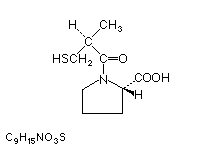
Captopril is a sulfhydryl containing ACE inhibitor. Captopril is used to treat hypertension (high blood pressure), congestive heart failure and kidney diseases in diabetic patients.
Primary Characteristics
It is of Synthetic origin and belongs to Mercapto L-Proline.
It belongs to Angiotensin converting enzyme inhibitor-ACEI pharmacological group on the basis of mechanism of action and also classified in Antihypertensive Agents pharmacological group.
Molecular Weight: 217.3 · pKa: 3.7, 9.8 · Solubility in Water: freely · Solubility in Alcohol: freely · Non-proprietary name: Captopril.
Pharmacokinetics
Absorption: Captopril has an oral bioavailability is 72% (±4%), pre-systemic (first-pass) metabolism accounts for 8.5% (±5.5%).
Distribution: Captopril has a volume of distribution is 0.7 l/kg. plasma protein binding is 30%.
Elimination: it is metabolised via rapid & extensive via liver, plasma half-life is 1-2 hr, renal excretion is 85%.
Advertisement
Indications
Captopril is primarily indicated in conditions like Congestive heart failure, Congestive heart failure (adjunct), Diabetic nephropathy, Diabetic retinopathy, Essential hypertension, Essential hypertension (mild to moderate), severe hypertension resistant to other treatment, Gastric acid reduction during anaesthesia, Hypertension, Iron deficiency anaemia, Prophylaxis of acid aspiration, Renal hypertension, Scleroderma renal crisis.
Contraindications
Captopril is contraindicated in conditions like Renal diseases, Collagen vascular disease, Renal artery stenosis.
Dosage
Captopril's dosage details are as follows:
| Dose | Single Dose | Frequency | Route | Instructions |
|---|---|---|---|---|
| Adult Dosage | ||||
| 31.25 mg | 31.25 mg | Every 12h | PO | |
| Paediatric Dosage (20kg) | ||||
| 1.25 mg/kg | 1.25 mg/kg | Every 8h | Oral | Gradually increase the Dose |
| Neonatal Dosage (3kg) | ||||
| 1.25 mg/kg | 1.25 mg/kg | Every 8h | Oral | Gradually increase the Dose |
Drug Interactions
Always consult your physician for the change of dose regimen or an alternative drug of choice that may strictly be required.
Side Effects
Captopril in overdosage may give rise to further complications which include Renal damage , Proteinuria .
Captopril produces potentially life-threatening effects which include Hyperkalemia , Neutropenia . Careful monitoring is needed with proper medical management.
The signs and symptoms that are produced after acute overdosage of Captopril are Angioedema, Laryngeal obstruction, Respiratory distress, Hypotension.
Captopril is known to cause more or less tolerable side effects which are usually transient. These include Cough , Skin rash, Taste disturbance.
Warnings / Precautions
Interference in Pathology
Captopril may interfere in the diagnosis of False +ve test for Urinary Nitrites and Acetone .
Available Brands
Storage Conditions
Drug Classification
- 1.12.3.3 — ACE inhibitors
- 2.12.4 — Drugs used in heart failure