
Hyoscyamine
Also known as: Hyoscyamine sulfate
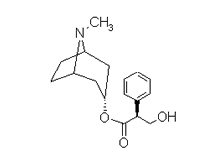
Hyoscyamine is anticholinergic alkaloid derived from Hyoscyamus niger, Atropa belladonna and other solanaceous plants. Hyoscyamine is antimuscarinic agent. Chemically Hyoscyamine is identified as 1aH, 5aH-Tropan-3a-ol (-)-tropate (ester) hydrobromide. Hyoscyamine is a levorotatoy isomer of a racemic mixture known as atropine. Therefore 1/2 of atropine is it. Since the dextrorotatory isomer is inactive the potency of Hyoscyamine is approximately twice that of atropine. It reduces motility of the stomach and intestinal tract and relieves cramping and reduces acid secretion. Hyoscyamine is effective in the treatment of peptic ulcers, diarrhea, irritable bowel syndrome, colitis or pancreatitis, parkinson's disease, asthma, poisonings due to certain insecticides or plants, to control bed-wetting in childrens and to treat alcohol withdrawal symptoms. Hyoscyamine is administered orally or parentrally.
Primary Characteristics
Hyoscyamine is also known as Hyoscyamine sulfate.
It is of Natural origin and belongs to Alkaloid.
It belongs to Cholinergic muscarinic antagonist pharmacological group on the basis of mechanism of action and also classified in Antispasmodic Agent pharmacological group. It is also classified under Gastrointestinal Anticholinergics/Antispasmodics .
Molecular Weight: 289.4 · Solubility in Water: Slightly soluble · Solubility in Alcohol: Freely soluble · Non-proprietary name: Hyoscyamine · pH: 5.9 · Isotonic value: 6.53.
Pharmacokinetics
Distribution: Hyoscyamine has a plasma protein binding is 50%.
Elimination: it is metabolised via Hepatic, plasma half-life is 3-5 hours.
Advertisement
Indications
Hyoscyamine is primarily indicated in conditions like GI diseases, Rhinitis, Visceral spasms.
Hyoscyamine is also indicated for secondary conditions like Hyperhidrosis, Parkinsonism, Peptic ulcer.
Contraindications
Hyoscyamine is contraindicated in conditions like Myasthenia gravis, Obstructive uropathy, Narrow-angle glaucoma, GI obstruction.
Dosage
Hyoscyamine's dosage details are as follows:
| Dose | Single Dose | Frequency | Route | Instructions |
|---|---|---|---|---|
| Adult Dosage | ||||
| 375 ug | 375 ug | Every 6h | IV,SC | |
| 225 ug | 225 ug | Every 6h | PO,SL | |
| Paediatric Dosage (20kg) | ||||
| 0.75 mg/kg | 0.75 mg/kg | — | ||
| 5.21 ug/kg | 5.21 ug/kg | Every 6h | Oral | Recommended for Paeds of 2-12 years of age |
| Neonatal Dosage (3kg) | ||||
| 4.6 ug/kg | 4.6 ug/kg | Every 6h | Oral | |
Drug Interactions
Always consult your physician for the change of dose regimen or an alternative drug of choice that may strictly be required.
Side Effects
Hyoscyamine in overdosage may give rise to further complications which include Increased IOP (intraocular pressure).
Hyoscyamine produces potentially life-threatening effects which include Tachycardia, Palpitation . Careful monitoring is needed with proper medical management.
The signs and symptoms that are produced after acute overdosage of Hyoscyamine are Blurred vision, Tachycardia, Foul Breath.
Hyoscyamine is known to cause more or less tolerable side effects which are usually transient. These include Ataxia, Diaphoresis, Dry mouth, Dry nose, Dry skin, Dysuria, Headache, Light headedness, Loss of memory, Orthostatic hypotension, rashes, Tremor, Xerostomia .
Warnings / Precautions
Available Brands
Click on a strength to view available brands.
Single Ingredient
Storage Conditions
Drug Classification
- 1.17.5 — Antispasmodics