
Proparacaine (HCl)
Also known as: Proxymethacaine
Proparacaine (HCl) used as an anesthetic in opthalmology.
Primary Characteristics
Proparacaine (HCl) is also known as Proxymethacaine.
It belongs to Aminobenzoicacid Ester.
It is classified in Local Anesthetic, Opthalmic pharmacological group. It is also classified under Opthalmic Products .
Molecular Weight: 330.8 · Solubility in Water: soluble · Solubility in Alcohol: soluble · Non-proprietary name: Proparacaine (HCl) · pH: 6.05 · Isotonic value: 7.46.
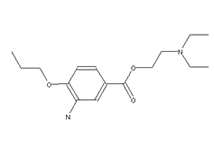
Pharmacokinetics
None recorded.
Advertisement
Indications
Proparacaine (HCl) is primarily indicated in conditions like Anesthesia.
Proparacaine (HCl) is also indicated for secondary conditions like Cataract, Glucoma.
Contraindications
Proparacaine (HCl) is contraindicated in conditions like Hypersensitivity to any component of product.
Dosage
Proparacaine (HCl)'s dosage details are as follows:
| Dose | Single Dose | Frequency | Route | Instructions |
|---|---|---|---|---|
| Adult Dosage | ||||
| 0.375 % | 0.375 % | — | Ophthalmic | As Required |
| Paediatric Dosage (20kg) | ||||
| 0.38 mg | 0.38 mg | — | Opthalmic | As Required |
| Neonatal Dosage (3kg) | ||||
| No data. | ||||
Drug Interactions
None recorded.
Side Effects
Proparacaine (HCl) in overdosage may give rise to further complications which include CNS depression, Cardiac arrhythmias, Hemorrhage, Conjunctival congestion, Keratitis .
Proparacaine (HCl) is known to cause more or less tolerable side effects which are usually transient. These include Blurred vision, Burning, Contact dermatitis, Diaphoresis, Lacrimation, Redness, Stinging on application.
Warnings / Precautions
Available Brands
Storage Conditions
Drug Classification
- 1.21.7 — Other ophthalmologicals