
Paroxetine
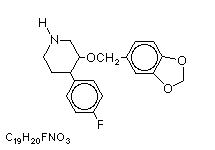
Paroxetine (HCl) is antidepressant and belongs to selective serotonin reuptake inhibitors (SSRIs). Paroxetine (HCl) is used to treat obsessive-compulsive disorders and panic disorders. Paroxetine (HCl) is a phenylpiperidine derivative that is prepared by chemical synthesis. Paroxetine (HCl) is optically active and the (-) nantiomer is used clinically. Paroxetine (HCl) is not available in any combination preparations. Paroxetine (HCl) is administered orally.
Primary Characteristics
Paroxetine is also known as Paroxetine (HCl), .
It is of Synthetic origin and belongs to Phenyl Piperidine.
It is classified in Antidepressant pharmacological group. It is also classified under Psychotherapeutic Drugs .
Molecular Weight: 365.8 · pKa: 9.9 · Solubility in Water: 1 in 125 · Solubility in Alcohol: >1 in 5 · Non-proprietary name: Paroxetine (HCl).
Pharmacokinetics
Absorption: Paroxetine has an oral bioavailability is 50% (±50%).
Distribution: Paroxetine has a volume of distribution is 3.1-28 l/kg. plasma protein binding is 95%.
Elimination: it is metabolised via hepatic, plasma half-life is 24hr, renal excretion is 24(19-29)%.
Advertisement
Indications
Paroxetine is primarily indicated in conditions like Acute dystonia, Depression, Depression accompanied by anxiety, Depressive illness and post-traumatic stress disorder, Monotherapy (epilepsy), Obsessive-compulsive disorders, Panic disorders, Post traumatic stress disorder, Social phobia.
Contraindications
Paroxetine is contraindicated in conditions like Epilepsy, Heart failure, Mania, Seizures, Hypersensitivity.
Dosage
Paroxetine's dosage details are as follows:
| Dose | Single Dose | Frequency | Route | Instructions |
|---|---|---|---|---|
| Adult Dosage | ||||
| 20 mg | 20 mg | Every 24h | PO | |
| Paediatric Dosage (20kg) | ||||
| 0 – 0 | — | — | Not recommended for this age group | |
| Neonatal Dosage (3kg) | ||||
| 0 – 0 | — | — | Not recommended in this age group | |
Drug Interactions
Always consult your physician for the change of dose regimen or an alternative drug of choice that may strictly be required.
Side Effects
Paroxetine in overdosage may give rise to further complications which include Convulsions , Myopathy , Mania , Oro-facial dystonia, Impotence , Angioedema , Urticaria , Tremors , Glaucoma , Extrapyramidal symptoms, Galactorrhea.
The signs and symptoms that are produced after acute overdosage of Paroxetine are Somnolence, Coma, Nausea & vomiting, Fever, Dilated pupils, Sweating , Tremor, Irritability, Tachycardia , Dry mouth, BP changes, Involuntary muscle contraction.
Paroxetine is known to cause more or less tolerable side effects which are usually transient. These include Agitation , Anorexia , Anxiety, Blurred vision, Confusion, Constipation , Decrease in libido, Diaphoresis, Diarrhea, Dizziness, Dreams abnormality, Ejaculatory disturbances, Ejaculatory failure, Elevation of liver enzymes, Flatulence, Hallucination , Headache, Hyperreflexia, Hyponatremia, Hypotension , Increased intracranial pressure, Insomnia, Jaundice , Mucous membrane bleeding, Myoclonus, Nausea, Nervousness, Palpitation, Postural hypotension, Rashes , Skin bleeding, SomnolenceX, Suicidal attempts, Sweating , Taste disturbances, Thrombocytopenia, Urinary retensionX, Vasodilation , Vomiting , Weakness, Xerostomia , Yawning.
Warnings / Precautions
Available Brands
Storage Conditions
Drug Classification
- 1.24.2.1 — Drugs used in depression
Manufacturers
Manufacturers of Paroxetine in Pakistan: