
Oxolinic Acid
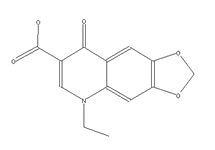
Oxolinic Acid belongs to quinolone antibiotics. itsimilar in structure and function to nalidixic acid, used as an urinary antiseptic for treatment of urinary infections. May cause CNS stimulation and GI upset. Should not be given in epilepsy.
Primary Characteristics
It is of Semi Synthetic origin.
It belongs to DNA Gyrase inhibitor pharmacological group on the basis of mechanism of action and also classified in Antibacterial pharmacological group.
Non-proprietary name: Oxolinic Acid.
Pharmacokinetics
Distribution: Oxolinic Acid has a plasma protein binding is 70%.
Elimination: plasma half-life is 0.4-0.8 hrs.
Advertisement
Indications
Oxolinic Acid is primarily indicated in conditions like Cerebro-vascular insufficiency, Diabetic nephropathy, Peripheral vascular disease, Sickle cell disease.
Contraindications
Oxolinic Acid is contraindicated in conditions like Hypersensitivity to the drug.
Dosage
Oxolinic Acid's dosage details are as follows:
| Dose | Single Dose | Frequency | Route | Instructions |
|---|---|---|---|---|
| Adult Dosage | ||||
| 750 mg | 750 mg | Every 12h | PO | |
| Paediatric Dosage (20kg) | ||||
| No data. | ||||
| Neonatal Dosage (3kg) | ||||
| No data. | ||||
Drug Interactions
Always consult your physician for the change of dose regimen or an alternative drug of choice that may strictly be required.
Side Effects
Oxolinic Acid is known to cause more or less tolerable side effects which are usually transient. These include CNS effects, Diarrhea, Vomiting .
Warnings / Precautions
Interference in Pathology
Oxolinic Acid may interfere in the diagnosis of Liver Function Test (LFT) , Monitoring of hematologic profile.
Available Brands
None recorded.
Storage Conditions
Drug Classification
- 1.6.2.2.2 — Quinolones