
Nitroglycerin
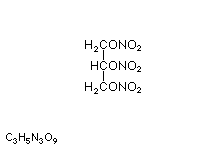
Nitroglycerin is an organic nitrate, first synthesized in 1846, but not recognized to have antianginal effects until 1879. Chemically Nitroglycerin is 1, 2, 3-propanetriol trinitrate. Nitroglycerin is a vasodilator, available in many dosage forms, proven to be the mainstay of therapy in the management of angina pectoris. Nitroglycerin is also used to control perioperative hypertension, to produce controlled hypotension during surgical procedures, to treat hypertensive emergencies, and to treat congestive heart failure associated with myocardial infarction. The use of sublingual nitroglycerin for the relief of acute anginal attacks was established in 1879. Because Nitroglycerin is inexpensive, has a rapid onset of action, and has a well-documented efficacy, sublingual nitroglycerin is still considered the drug of choice for the acute relief of angina. Nitroglycerin was granted FDA approval in 1938.
Primary Characteristics
It belongs to Organonaitrates.
It is classified in Vasodilators pharmacological group.
Molecular Weight: 227.09 · Non-proprietary name: Nitroglycerin.
Pharmacokinetics
Absorption: Nitroglycerin has an oral bioavailability is 50% (±50%).
Advertisement
Indications
Nitroglycerin is primarily indicated in conditions like Angina pectoris, Heart failure, Myocardial infarction (non st-segment elevation).
Contraindications
Nitroglycerin is contraindicated in conditions like Myocardial infarction, Increase intracranial pressure, Hypersensitivity to any component of product.
Dosage
Nitroglycerin's dosage details are as follows:
| Dose | Single Dose | Frequency | Route | Instructions |
|---|---|---|---|---|
| Adult Dosage | ||||
| 400 µg | 400 µg | — | Aerosal Spray | |
| 2 – 6 mg | — | Every 8h | PO | |
| 300 – 600 µg | — | Every 8h | Sublingual | Repeated every 5 minutes |
| Paediatric Dosage (20kg) | ||||
| 0.375 ug/kg.min | 0.375 ug/kg.min | — | IV Infusion | Initially, As Required |
| 3 ug/kg.min | 3 ug/kg.min | — | IV Infusion | Maintenance . May be increased upto 20ug/kg.min as required |
| Neonatal Dosage (3kg) | ||||
| No data. | ||||
Drug Interactions
Always consult your physician for the change of dose regimen or an alternative drug of choice that may strictly be required.
Side Effects
Nitroglycerin is known to cause more or less tolerable side effects which are usually transient. These include Blurred vision, Contact dermatitis, dizziness, Dry mouth, Flushing, Headache, Local irritation, Nausea, Palpitation, Restlessness, Skin rashes, Vomiting .
Warnings / Precautions
Interference in Pathology
Nitroglycerin may interfere in the diagnosis of Zlatkis-Zac reaction used in the measurement of serum cholesterol concentrations .
Available Brands
Storage Conditions
Drug Classification
- 1.12.1 — Antianginal drugs
Manufacturers
Manufacturers of Nitroglycerin in Pakistan: