
Moxonidine
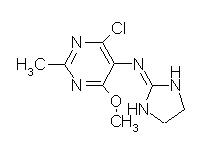
Moxonidine is antihypertensive agent acts on imidazoline sub-type 1 receptors to the brain medula. Used alone or in combination therapy to reduce mild to moderate blood pressure. May cause dry mouth, headache, nausea and insomnia.
Primary Characteristics
It belongs to Methylpyrimidine.
It belongs to Alpha-2 adrenergic agonist pharmacological group on the basis of mechanism of action and also classified in Antihypertensive Agents pharmacological group.
Molecular Weight: 241.7 · Solubility in Water: very slightly soluble · Solubility in Alcohol: Sparangly soluble · Non-proprietary name: Moxonidine.
Pharmacokinetics
Absorption: Moxonidine has an oral bioavailability is 88%.
Distribution: Moxonidine has a plasma protein binding is 7 %.
Elimination: plasma half-life is 2-3hr.
Advertisement
Indications
Moxonidine is primarily indicated in conditions like Hypertension, Mild iron-deficiency anaemias.
Contraindications
Moxonidine is contraindicated in conditions like Depression, Glucoma, Parkinsonism, Raynaud's phenomenon.
Dosage
Moxonidine's dosage details are as follows:
| Dose | Single Dose | Frequency | Route | Instructions |
|---|---|---|---|---|
| Adult Dosage | ||||
| 200 ug | 200 ug | Every 24h | Initially. | |
| 400 ug | 400 ug | — | As a single or in 2 divided doses . | |
| 600 ug | 600 ug | — | After further 3 weeks | |
| Paediatric Dosage (20kg) | ||||
| 0 – 0 | — | — | Not recommended for this age group | |
| Neonatal Dosage (3kg) | ||||
| 0 – 0 | — | — | Not recommended in this age group | |
Drug Interactions
Always consult your physician for the change of dose regimen or an alternative drug of choice that may strictly be required.
Side Effects
The signs and symptoms that are produced after acute overdosage of Moxonidine are Bradycardia, Coma, Miosis, Sedation , Transient hypertension.
Moxonidine is known to cause more or less tolerable side effects which are usually transient. These include Anorexia , Burning, Constipation , Dizziness, Dry mouth, Headache, Itching, Sleep disturbancesX, Tiredness .
Warnings / Precautions
Available Brands
None recorded.
Storage Conditions
Drug Classification
- 1.12.3.6 — Centrally acting sympathoplegic drugs