
Clemastine
Clemastine is antihistaminic agent. Chemically Clemastine is (+)-2-[2(p-chloro-a-methyl-a-phenylbenzyl)oxy]ethyl]-1-methylpyrrolidine. Clemastine is effective in providing relief from symptoms of allergies such as watery eyes, runny nose, itching and sneezing.
Primary Characteristics
Clemastine is also known as Clemastine Fumarate.
It is of Synthetic origin and belongs to Methyl Pyrolidine.
It belongs to H1-antagonist pharmacological group on the basis of mechanism of action.
Molecular Weight: 460 · Solubility in Water: slightly · Solubility in Alcohol: sparingly · Non-proprietary name: Clemastine.
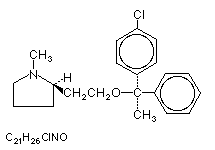
Pharmacokinetics
Absorption: Clemastine has an oral bioavailability is 50% (±50%).
Distribution: Clemastine has a plasma protein binding is 95%.
Elimination: it is metabolised via Hepatic, plasma half-life is 21.3hr, renal excretion is 45-65%.
Advertisement
Indications
Clemastine is primarily indicated in conditions like Advanced ovarian cancer, Allegic rhinopathies, Hay fever, Insect bites, Rhinitis, Symptomatic relief of allergy, Urticaria.
Clemastine is also indicated for secondary conditions like Anaphylactic reactions, Angioneurotic edema, Dermatitis, Drug eruptions, Eczema.
Contraindications
Clemastine is contraindicated in conditions like Porphyria, Hypersensitivity.
Dosage
Clemastine's dosage details are as follows:
| Dose | Single Dose | Frequency | Route | Instructions |
|---|---|---|---|---|
| Adult Dosage | ||||
| 1 mg | 1 mg | Every 12h | PO | |
| Paediatric Dosage (20kg) | ||||
| 0.037 mg/kg | 0.037 mg/kg | Every 12h | Oral | - |
| Neonatal Dosage (3kg) | ||||
| 0 – 0 | — | — | Not recommended under 1 yr. | |
Drug Interactions
Always consult your physician for the change of dose regimen or an alternative drug of choice that may strictly be required.
Side Effects
Clemastine in overdosage may give rise to further complications which include CNS stimulation.
The signs and symptoms that are produced after acute overdosage of Clemastine are Nausea & vomiting, Seizures, Constipation, Dilated pupils, Dry mouth, postical depression, Hyperthermia.
Clemastine is known to cause more or less tolerable side effects which are usually transient. These include Constipation , Dry mouth, Fatigue, Gastralgia , Headache, Nausea, Sedation , Skin rash.
Warnings / Precautions
Available Brands
Click on a strength to view available brands.
Single Ingredient
Multi-Ingredient Combinations
Storage Conditions
Drug Classification
- 1.3 — Anti-allergics (Antihistamines) and drugs used in anaphylaxis
- 2.25.2.1 — Cold preparations