
Triamcinolone
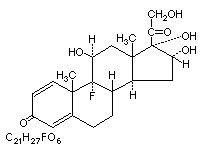
Triamcinolone and its derivatives are synthetic glucocorticoids used as anti-inflammatory or immunosuppressive agents. Triamcinolone is commercially available in oral, parenteral, topical, and aerosol formulations. Triamcinolone decreases inflammation by inhibiting the release of leukocytic acid hydrolases, preventing macrophage accumulation at the site of infection, interfering with leukocyte adhesion to the capillary wall, reducing capillary membrane permeability (thereby reducing edema), reducing complement components, inhibiting histamine and kinin release, and interfering with the formation of scar tissue. Inhaled Triamcinolone is believed to reduce the immediate and late-phase allergic responses associated with chronic bronchial asthma. Triamcinolone was approved by the FDA in 1957.
Primary Characteristics
Triamcinolone is also known as Triamcinolone Acetonide.
It is of Synthetic origin and belongs to Corticosteroid.
It belongs to Glucocorticoid agonist pharmacological group on the basis of mechanism of action and also classified in Corticosteroid Adrenal pharmacological group.
Molecular Weight: 394.4 · Solubility in Water: 1 in 240 · Solubility in Alcohol: 1 in 40 · Non-proprietary name: Triamcinolone.
Pharmacokinetics
Distribution: Triamcinolone has a volume of distribution is 99.5 - 148 litre. plasma protein binding is low.
Elimination: plasma half-life is 1.5 - 5 hr, renal excretion is 40 - 60 %.
Advertisement
Indications
Triamcinolone is primarily indicated in conditions like Asthma, Bronchospasm, Dermatosis, Eczema, Gout, Haemolytic anaemia, Lichen planus, Lupus erythematosus, Nephrotic syndrome, Osteoarthritis, Pruritus, Psoriasis, Rheumatic fever, Rheumatoid arthritis, Suppression of inflammatory and allergic disorders, Termination of pregnancy of 13-24 weeks gestation.
Contraindications
Triamcinolone is contraindicated in conditions like Diabetes mellitus, Peptic ulcer, Psychosis, Osteoporosis, Infections, Acne vulgaris, Rosacea, Superficial leisions, Myopathy, Gravitational ulceration.
Dosage
Triamcinolone's dosage details are as follows:
| Dose | Single Dose | Frequency | Route | Instructions |
|---|---|---|---|---|
| Adult Dosage | ||||
| 1 mg | 1 mg | — | IM | Once in a Week |
| 200 ug | 200 ug | Every 6h | Inhalation | Dose should not be exceeded from 1600 ug daily. |
| 0.171 mg/ kg | 0.171 mg/ kg | — | Intra Articular | Once in a Month |
| 26 mg | 26 mg | Every 24h | PO | As a single or in divided doses |
| 0.1 % | 0.1 % | Every 12h | Topical | As Required |
| Paediatric Dosage (20kg) | ||||
| 16 ug/kg | 16 ug/kg | Every 6h | Inhalation | For 6--14 yrs. children . Not recommended below 6 yrs. of children |
| Neonatal Dosage (3kg) | ||||
| 0 – 0 | — | — | Not recommended in this age group | |
Drug Interactions
Always consult your physician for the change of dose regimen or an alternative drug of choice that may strictly be required.
Side Effects
Triamcinolone in overdosage may give rise to further complications which include Atrophy , Buffalo hump , Distribution of fat on torso , Glaucoma , Moon face , Osteoporosis , Skin fragility , Steroid purpura, Striae .
Triamcinolone produces potentially life-threatening effects which include Cushing`s syndrome, Diabetes, Hypertension, Growth suppression, Adrenal suppression. Careful monitoring is needed with proper medical management.
Triamcinolone is known to cause more or less tolerable side effects which are usually transient. These include Acne, Hirsutism , Menstrual irregularity, Purpura, Striae.
Warnings / Precautions
Available Brands
Click on a strength to view available brands.
Single Ingredient
Multi-Ingredient Combinations
Storage Conditions
Drug Classification
- 1.13.3.1 — Corticosteroids plain
- 2.18.1 — Corticosteroids, systemic
- 3.25.1.1 — Oral/Parenteral antiasthmatics
- 4.25.1.2 — Inhalants
- 5.25.4 — Nasal preparations
- 6.28 — Otic drugs