
Sulphasalazine
Also known as: Sulfasalazine, Salazosulfapyridine, Salicylazosulfaprridine
Sulphasalazine is a prodrug used in the treatment of ulcerative colitis. The drug is a combination of sulfapyridine and 5-aminosalicylic acid (mesalamine). Sulfasalazine is cleaved to these active components by bacteria in the colon. The subsequent local actions of mesalamine are believed to be responsible for the effectiveness of sulfasalazine in the treatment of inflammatory bowel disease. Mesalamine is also commercially available in oral and rectal preparations. Even though mesalamine is a metabolite of sulfasalazine, mesalamine blood levels are lower when administered as sulfasalazine. Side effects may be minimized by administering mesalamine as sulfasalazine. Sulfasalazine was approved by the FDA in 1950.
Primary Characteristics
Sulphasalazine is also known as Sulfasalazine, Salazosulfapyridine, Salicylazosulfaprridine.
It is of Synthetic origin and belongs to Sulphonamide.
It belongs to Ulcerative Colitis remedies (GI) pharmacological group on the basis of mechanism of action and also classified in Antipeptic Ulcerant pharmacological group.
Molecular Weight: 398.39 · pKa: 2.4, 8.3, 11.0 · Solubility in Water: Insoluble · Solubility in Alcohol: 1 in 2900 · Non-proprietary name: Sulphasalazine.
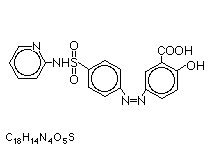
Pharmacokinetics
Absorption: Sulphasalazine has an oral bioavailability is 25% (±5%), pre-systemic (first-pass) metabolism accounts for 75% (±5%).
Distribution: Sulphasalazine has a plasma protein binding is 95 - 99 %.
Elimination: it is metabolised via Hepatic, plasma half-life is 6 - 10 hr, renal excretion is extensive.
Advertisement
Indications
Sulphasalazine is primarily indicated in conditions like Assessment of thyroid function, Crohn's disease, Cyclical benign breast disease, Enhance permeation of SC or IM inj, Mild to moderate and severe ulcerative colitis, Premenstrual syndrome, Rheumatoid arthritis, Ulcerative colitis.
Contraindications
Sulphasalazine is contraindicated in conditions like Porphyrias.
Dosage
Sulphasalazine's dosage details are as follows:
| Dose | Single Dose | Frequency | Route | Instructions |
|---|---|---|---|---|
| Adult Dosage | ||||
| 2 g | 2 g | Every 24h | PO | |
| Paediatric Dosage (20kg) | ||||
| 6.25 mg/kg | 6.25 mg/kg | Every 6h | Oral | Maintenance |
| 12.5 mg/kg | 12.5 mg/kg | Every 6h | Oral | Initially for acute attack |
| Neonatal Dosage (3kg) | ||||
| 6.25 mg/kg | 6.25 mg/kg | Every 6h | Oral | Maintenance |
| 12.5 mg/kg | 12.5 mg/kg | Every 6h | Oral | Initially for acute attack |
Drug Interactions
Always consult your physician for the change of dose regimen or an alternative drug of choice that may strictly be required.
Side Effects
Sulphasalazine in overdosage may give rise to further complications which include Exfoliative dermatitis , Fibrosing alveolitis , Hemolytic anemia , Hepatitis , Infertility , Lyell's syndrome, Oligospermia , Peripheral neuropathy , Renal damage , Serum sickness , Stevens johnson syndrome , Systemic lupus erythematosus .
Sulphasalazine produces potentially life-threatening effects which include Agranulocytosis, Thrombocytopenia . Careful monitoring is needed with proper medical management.
The signs and symptoms that are produced after acute overdosage of Sulphasalazine are Renal failure, Salicylate poisoning.
Warnings / Precautions
Interference in Pathology
Sulphasalazine may interfere in the diagnosis of Non-Specific Spectrophotometric Determinations .
Available Brands
Click on a strength to view available brands.
Single Ingredient
Storage Conditions
Drug Classification
- 1.2.4 — Disease modifying antirheumatic drugs
- 2.6.2.2.8 — Sulphonamides and trimethoprim
- 3.17.4 — Anti-inflammtory drugs