
Quinine
Quinine is the principal alkaloid derived from the bark of cinchona tree. The benefits of cinchona bark were first recognized in 1630 in South America. Quinine was isolated from cinchona bark in 1820 and is still obtained from the natural source. Quinine is the levorotatory isomer of quinidine, a more potent, but more toxic, antimalarial. Quinine is a rapidly acting antimalarial agent. It suppresses the asexual erythrocytic forms of al malarial parasites and has a slight effect on the gametocytes of Plasmodium vivax and Plasmodium malariae but none on those of Plasmodium faciparum. It has been used in malaria suppression and treatment for more than 300 years. Although superseded by other antimalarial drugs, following the development of widespread resistance to chloroquine and other drugs, it has again become an important antimalarial drug. It also has analgesic, antipyretic, mild oxtocic, cardiac depressant and sclerosing properties. Quinine was approved by the FDA in 1939.
Primary Characteristics
Quinine is also known as Quinine (Bisulphate).
It is of Natural origin and belongs to Alkaloid.
It belongs to Antiplasmodial pharmacological group on the basis of mechanism of action and also classified in Antimalarial Agent pharmacological group.
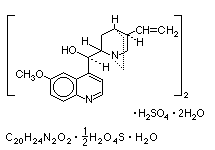
Molecular Weight: 378.5 · pKa: 4.1, 8.5 · Solubility in Water: very low · Solubility in Alcohol: 1 in 1 · Non-proprietary name: Quinine · pH: 2.5 · Isotonic value: 5.07.
Pharmacokinetics
Absorption: Quinine has an oral bioavailability is 82.5% (±2.5%), pre-systemic (first-pass) metabolism accounts for 5% (±5%).
Distribution: Quinine has a volume of distribution is 1.5 l/kg. plasma protein binding is 70-90%.
Elimination: it is metabolised via Hepatic, plasma half-life is 8-21 hr, renal excretion is >20%.
Advertisement
Indications
Quinine is primarily indicated in conditions like Acute leukemia, Adjunctive therapy without valproate, Chloroquine resistant malaria, Lymphomas, Muscle spasm in myotonia congenita, Nocturnal muscle cramps prevention, Severe falciparum malaria.
Contraindications
Quinine is contraindicated in conditions like Myasthenia gravis, Congestive heart failure, Atrial fibrillation, Atrial flutter, Sinoatrial node disease, Hypersensitivity.
Dosage
Quinine's dosage details are as follows:
| Dose | Single Dose | Frequency | Route | Instructions |
|---|---|---|---|---|
| Adult Dosage | ||||
| 10 mg/ kg | 10 mg/ kg | Every 8h | PO,IM,IV Inf | For 7 days. |
| Paediatric Dosage (20kg) | ||||
| 10 mg/kg | 10 mg/kg | Every 8h | Oral | For 7 Days (As Quinine Sulphate) |
| Neonatal Dosage (3kg) | ||||
| 10 mg/kg | 10 mg/kg | Every 8h | Oral | For 7 Days (As Quinine Sulphate) |
Drug Interactions
Always consult your physician for the change of dose regimen or an alternative drug of choice that may strictly be required.
Side Effects
Quinine in overdosage may give rise to further complications which include Ventricular arrhythmia, Leukopenia, Thrombocytopenia , Agranulocytosis , Angina , Ventricular fibrillation , Pancytopenia , Hypoprothorombinemia, Bronchoconstriction.
Quinine produces potentially life-threatening effects which include Hemolytic anemia, Sinus arrest, Junctional rhythms, AV block, Hemolytic uremic syndrome. Careful monitoring is needed with proper medical management.
The signs and symptoms that are produced after acute overdosage of Quinine are Seizures, Hypoglycemia, Lesions of auditory nerve, Hypotension, Contracted visual fields, Central scotoma, Respiratory depression, Heart block, Sinus tachycardia, Blindness, Optic nerve blindness, Coma, Blurred vision, Visual distrubances, Abnormal color vision, Respiratory depression.
Quinine is known to cause more or less tolerable side effects which are usually transient. These include Abdominal pain, Cinchonism , Confusion, Diplopia, Erythema, Fever, Headache, Maculopapular rash, Nausea, Night blindness, Photophobia , Photosensitivity, Pruritus , Syncope , Tinnitus, Visual disorders, Vomiting , Wheezing .
Warnings / Precautions
Interference in Pathology
Quinine may interfere in the diagnosis of Methods for Measuring Urinary Alkaloids, Corticosteroids, 17-OH-Corticosteroids & Heroin , False Decrease in ESR , Tests for Plasma Catecholamines .
Available Brands
Storage Conditions
Drug Classification
- 1.6.4.3 — Antimalarials