
Pyridoxine
Also known as: Vitamin B6, Adermine HCl
Pyridoxine, or vitamin B6, is a naturally occurring, water-soluble vitamin found in food such as cereal grains, legumes, vegetables, liver, meat, and eggs. Pyridoxine is used to treat and prevent vitamin B6 deficiency; to prevent or treat toxicity from isoniazid, cycloserine, or hydralazine; and to treat sideroblastic anemia associated with elevated serum iron levels. It also has been used in pyridoxine-dependent neonates to treat seizures that are unresponsive to conventional therapy and in patients with metabolic disorders such as xanthurenic aciduria, primary hyperoxaluria, primary cystathioninuria, and primary homocystinuria. Pyridoxine hydrochloride has been commercially available since approval by the FDA in 1940.
Primary Characteristics
Pyridoxine is also known as Vitamin B6, Adermine HCl, Pyridoxine HCl.
It is of Synthetic origin and belongs to Pyridine.
It belongs to Nutrients and Vitamins pharmacological group on the basis of mechanism of action.
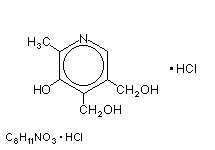
Molecular Weight: 205.6 · pKa: 5.0, 9.0 · Solubility in Water: 1 in 5 · Solubility in Alcohol: 1 in 115 · Non-proprietary name: Pyridoxine (HCl) · pH: 3.2 · Isotonic value: 3.05.
Pharmacokinetics
Absorption: Pyridoxine has an oral bioavailability is 73% (±2%), pre-systemic (first-pass) metabolism accounts for 0.5% (±0.5%).
Elimination: it is metabolised via Hepatic, plasma half-life is 15 - 20 days, renal excretion is extensive.
Advertisement
Indications
Pyridoxine is primarily indicated in conditions like Anaemia, Deficiency states, Idiopathic sideroblastic anaemia, Isoniazid neuropathy, Oedema and ascites in cirrhosis of the liver, Premenstrual syndrome, Schizophrenia and other psychoses, Vitamin deficiency.
Contraindications
None recorded.
Dosage
Pyridoxine's dosage details are as follows:
| Dose | Single Dose | Frequency | Route | Instructions |
|---|---|---|---|---|
| Adult Dosage | ||||
| 30 mg | 30 mg | Every 24h | PO, IV, IM | Dose vary according to indication, Daily requirement 1.7-2mg |
| Paediatric Dosage (20kg) | ||||
| 0.75 mg/kg | 0.75 mg/kg | Every 8h | Oral | |
| Neonatal Dosage (3kg) | ||||
| 0.75 mg/kg | 0.75 mg/kg | Every 8h | Oral | |
Drug Interactions
Always consult your physician for the change of dose regimen or an alternative drug of choice that may strictly be required.
Side Effects
Pyridoxine in overdosage may give rise to further complications which include Numbness , Neurotoxicity , Hyperesthesia, Bone pain , Paresthesia, Muscular weakness .
The signs and symptoms that are produced after acute overdosage of Pyridoxine are Hypervitaminosis , Neuropathy .
Pyridoxine is known to cause more or less tolerable side effects which are usually transient. These include Blurred vision, Burning, Dizziness, Drowsiness, Pain .
Warnings / Precautions
Available Brands
Click on a strength to view available brands.
Single Ingredient
Multi-Ingredient Combinations
Storage Conditions
Drug Classification
- 1.27 — Vitamins, minerals, tonics, and other susbstances
Manufacturers
Manufacturers of Pyridoxine in Pakistan: