
Pyrazinamide
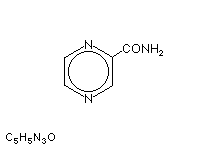
Pyrazinamide is antituberculosis agent. Pyrazinamide is the pyrazine analogue of nicotinamide. Pyrazinamide is stable and quite inexpensive. It may be bacteriostatic or bacteriocidal against Mycobacterium tuberculosis depending on the concentration of drug attained at the site of infection. Resistance to drug emerges rapidly when the drug is used alone. Therefore Pyrazinamide is always given in combination with other antituberculosis drug.
Primary Characteristics
It is of Synthetic origin and belongs to Amidopyrazine.
It belongs to Antimycobacterial agent pharmacological group on the basis of mechanism of action. It is also classified under Antituberculous Drugs .
Molecular Weight: 123.1 · pKa: 0.5 · Solubility in Water: 1 in 60 · Solubility in Alcohol: 1 in 110 · Non-proprietary name: Pyrazinamide.
Pharmacokinetics
Absorption: Pyrazinamide has an oral bioavailability is 83% (±7%).
Distribution: Pyrazinamide has a plasma protein binding is 50%.
Elimination: plasma half-life is 10-24 hr, renal excretion is 33-44%.
Advertisement
Indications
Pyrazinamide is primarily indicated in conditions like Acute leukemia, Tuberculosis (with other anti-tuberculosis drugs).
Pyrazinamide is also indicated for secondary conditions like Tuberculosis.
Contraindications
Pyrazinamide is contraindicated in conditions like Renal diseases, Hepatic disease.
Dosage
Pyrazinamide's dosage details are as follows:
| Dose | Single Dose | Frequency | Route | Instructions |
|---|---|---|---|---|
| Adult Dosage | ||||
| 27.5 mg/ kg | 27.5 mg/ kg | — | PO | Daily in 3-4 div.doses. Maximum dose: 3 g/24hr. Usually given during 1st 2 months of therapy. |
| Paediatric Dosage (20kg) | ||||
| 5 mg/kg | 5 mg/kg | Every 6h | Oral | For Paeds of All Ages |
| Neonatal Dosage (3kg) | ||||
| 5 mg/kg | 5 mg/kg | Every 6h | Oral | |
Drug Interactions
Always consult your physician for the change of dose regimen or an alternative drug of choice that may strictly be required.
Side Effects
Pyrazinamide in overdosage may give rise to further complications which include Sideroblastic anemia, Precipitation of gout .
Pyrazinamide produces potentially life-threatening effects which include Hepatitis , Hyperbilirubinemia. Careful monitoring is needed with proper medical management.
Pyrazinamide is known to cause more or less tolerable side effects which are usually transient. These include Anorexia , Arthralgia, Fever, Malaise, Nausea and vomiting.
Warnings / Precautions
Interference in Pathology
Pyrazinamide may interfere in the diagnosis of Acetest , Ketostix qualitative urine test for Ketones .
Available Brands
Click on a strength to view available brands.
Single Ingredient
Storage Conditions
Drug Classification
- 1.6.2.4 — Anti-tuberculosis drugs