
Pseudoephedrine (HCl)
Pseudoephedrine (HCl) is a sympathomimetic agent, closely related to ephedrine. Pseudoephedrine (HCl) is used in various cough and cold preparations as a nasal decongestant, provides relief from the nasal or sinus congestion.
Primary Characteristics
Pseudoephedrine (HCl) is also known as Pseudoephedrine, Pseudoephedrine Sulphate.
It is of Natural origin and belongs to Alkaloid.
It belongs to Alpha & Beta adrenergic agonist pharmacological group on the basis of mechanism of action. It is also classified under Nasal Decongestants .
Molecular Weight: 201.7 · pKa: 9.22 · Solubility in Water: 1 in 1.6 · Solubility in Alcohol: 1 in 4 · Non-proprietary name: Pseudoephedrine (HCl).
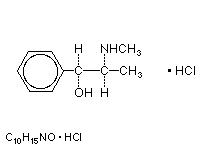
Pharmacokinetics
Absorption: Pseudoephedrine (HCl) has an oral bioavailability is 96.5% (±1.5%).
Distribution: Pseudoephedrine (HCl) has a volume of distribution is 2-3 l/kg.
Elimination: it is metabolised via Hepatic, plasma half-life is 5.4-8 hr, renal excretion is > 90%.
Advertisement
Indications
Pseudoephedrine (HCl) is primarily indicated in conditions like Bronchospasm, Nasal congestion, Rhinitis, Upper respiratory tract infections.
Contraindications
Pseudoephedrine (HCl) is contraindicated in conditions like Diabetes mellitus, Hypertension, Hyperthyroidism, Prostatic hypertrophy, Cardiovascular disease, Endocrine disorder.
Dosage
Pseudoephedrine (HCl)'s dosage details are as follows:
| Dose | Single Dose | Frequency | Route | Instructions |
|---|---|---|---|---|
| Adult Dosage | ||||
| 60 – 240 mg | — | Every 4h | PO | |
| 120 mg | 120 mg | Every 2h | PO | |
| Paediatric Dosage (20kg) | ||||
| 1.5 mg/kg | 1.5 mg/kg | Every 8h | Oral | - |
| Neonatal Dosage (3kg) | ||||
| 1.25 mg/kg | 1.25 mg/kg | Every 8h | Oral | |
Drug Interactions
Always consult your physician for the change of dose regimen or an alternative drug of choice that may strictly be required.
Side Effects
Pseudoephedrine (HCl) produces potentially life-threatening effects which include Hypertension, Unconsciousness. Careful monitoring is needed with proper medical management.
The signs and symptoms that are produced after acute overdosage of Pseudoephedrine (HCl) are Hyperreflexia , Hypertonicity , Rapid Speech , Tachycardia , Restlessness , Excitation , Pupillary dilatation, Hallucinations .
Pseudoephedrine (HCl) is known to cause more or less tolerable side effects which are usually transient. These include Anorexia , Anxiety, Drowsiness, Dry mouth, Insomnia, Restlessness, Sleep disturbancesX, Tremor.
Warnings / Precautions
Available Brands
Click on a strength to view available brands.
Storage Conditions
Drug Classification
- 1.25.2.3 — Cough sedatives
Manufacturers
Manufacturers of Pseudoephedrine (HCl) in Pakistan: