
Propofol
Also known as: Disoprofol
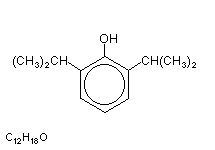
Propofol is extremely important intravenous anesthetic. Chemically Propofol is 2, 6-di-isopropylphenol. Propofol is chemically unrelated to other intravenous anesthetics. Propofol is used to induce anesthesia that can be maintained by continuous infusion or with inhalation anesthetics. It produces anesthesia at the rate similar to that of intravenous barbiturates, recovery is more rapid, and is associated with minimal postoperative confusion. Unlike many other general anesthetics, it possesses an antiemetic action. It received FDA approval in October 1989.
Primary Characteristics
Propofol is also known as Disoprofol.
It is of Synthetic origin and belongs to Phenol.
It belongs to Chloride Channel opener (Gaba operated) pharmacological group on the basis of mechanism of action. It is also classified under General Anesthetics .
Molecular Weight: 178 · pKa: 11 · Solubility in Water: slightly soluble · Solubility in Alcohol: very soluble · Non-proprietary name: Propofol.
Pharmacokinetics
Absorption: Propofol has an pre-systemic (first-pass) metabolism accounts for 83% (±7%).
Distribution: Propofol has a volume of distribution is 297-1100 litre. plasma protein binding is 97-98 %.
Elimination: it is metabolised via Hepatic, plasma half-life is 30 - 60 min, renal excretion is > 88 %.
Advertisement
Indications
Propofol is primarily indicated in conditions like Anesthesia, Induction of anaesthesia, Insomnia, Maintenance of anaesthesia, Sedation for surgical and diagnostic proceduers, Sedation in intensive care.
Contraindications
Propofol is contraindicated in conditions like Disorders of fat metabolism.
Dosage
Propofol's dosage details are as follows:
| Dose | Single Dose | Frequency | Route | Instructions |
|---|---|---|---|---|
| Adult Dosage | ||||
| 350 mg | 350 mg | — | IV Inf | As Required |
| Paediatric Dosage (20kg) | ||||
| 0.212 mg/kg.min | 0.212 mg/kg.min | — | IV Infusion | Maintenance, As Required |
| 3 mg/kg.min | 3 mg/kg.min | — | IV Infusion | For Induction of anaesthesia |
| Neonatal Dosage (3kg) | ||||
| 0 – 0 | — | — | Not recommended in this age group | |
Drug Interactions
Always consult your physician for the change of dose regimen or an alternative drug of choice that may strictly be required.
Side Effects
Propofol in overdosage may give rise to further complications which include Transient bradycardia, CNS depression.
Propofol produces potentially life-threatening effects which include Cardiopulmonary depression. Careful monitoring is needed with proper medical management.
Propofol is known to cause more or less tolerable side effects which are usually transient. These include Thrombophlebitis .
Warnings / Precautions
Available Brands
Click on a strength to view available brands.
Single Ingredient
Storage Conditions
Drug Classification
- 1.1.1.1 — Intravenous agents