
Piroxicam
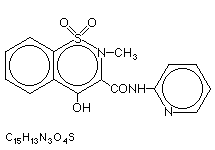
Piroxicam is a nonsteroidal anti-inflammatory drugs (NSAIDs), possesses analgesic and antipyretic properties. Piroxicam is structurally unrelated to other NSAIDs. It has a long half-life and may be administered as a single daily dose, which can be an advantage over other NSAIDs. The anti-inflammatory potential of it has been equated with that of indomethacin, and its analgesic activity has been shown to be greater than that of aspirin. Piroxicam is indicated in the treatment of osteoarthritis and rheumatoid arthritis. It was approved by the FDA in 1982. The anti-inflammatory effects of it may result from the peripheral inhibition of prostaglandin synthesis due to the inhibition of the enzyme cyclooxygenase. It also can inhibit the activation of neutrophils, which may contribute to antiinflammatory effects as well. Prostaglandins sensitize pain receptors, and their inhibition is believed to be responsible for the analgesic effects of it.
Primary Characteristics
It is of Synthetic origin and belongs to Oxicam.
It belongs to Cyclo-oxygenase inhibitor pharmacological group on the basis of mechanism of action. It is also classified under Analgesics and Anti-inflammatory Agents .
Molecular Weight: 331.3 · pKa: 6.3 · Solubility in Water: slightly soluble · Solubility in Alcohol: slightly soluble · Non-proprietary name: Piroxicam.
Pharmacokinetics
Absorption: Piroxicam has an oral bioavailability is 100%.
Distribution: Piroxicam has a volume of distribution is 0.1 l/kg. plasma protein binding is 99 %.
Elimination: plasma half-life is 30 - 60 hr, renal excretion is 10 %.
Advertisement
Indications
Piroxicam is primarily indicated in conditions like Acute gout, Acute spasm and spasm in diagnostic procedures, Ankylosing spondylitis, Benign gastric and duodenal ulceration, Duodenal ulceration, Gout, Juvenile chronic arthritis, Musculoskeletal disorders, Nausea and vomiting (palliative care), Osteoarthritis, Pain, Resistant oedema, Rheumatoid arthritis.
Contraindications
Piroxicam is contraindicated in conditions like Peptic ulcer, Thrombosis, Impaired hepatic function.
Dosage
Piroxicam's dosage details are as follows:
| Dose | Single Dose | Frequency | Route | Instructions |
|---|---|---|---|---|
| Adult Dosage | ||||
| 20 mg | 20 mg | Every 24h | PO | Maintenance for 1-2 Weeks |
| 40 mg | 40 mg | Every 24h | PO | Initial for 2 Days |
| Paediatric Dosage (20kg) | ||||
| 0.4 mg/kg | 0.4 mg/kg | Every 24h | Oral | Not Recommended Under 6 Yrs of Age |
| Neonatal Dosage (3kg) | ||||
| 0 – 0 | — | — | Not recommended in this age group | |
Drug Interactions
Always consult your physician for the change of dose regimen or an alternative drug of choice that may strictly be required.
Side Effects
Piroxicam in overdosage may give rise to further complications which include Erythema , Skin reactions .
Piroxicam produces potentially life-threatening effects which include GI bleeding, Aplastic Anemia , Renal damage, Peptic ulceration, Purpura , Pemphigus vulagris. Careful monitoring is needed with proper medical management.
The signs and symptoms that are produced after acute overdosage of Piroxicam are Nausea, Diarrhea, Hematuria, Proteinuria, Renal failure, GI hemorrhage, Vomiting, Hypoprothrombinemia, GI disturbances.
Piroxicam is known to cause more or less tolerable side effects which are usually transient. These include Confusion, Dizziness, Headache, Hearing loss, Hypoglycemia, Insomnia, Mood swings, Palpitation, Paresthesias, VertigoX.
Warnings / Precautions
Interference in Pathology
Piroxicam may interfere in the diagnosis of Complete blood cell count.
Available Brands
Storage Conditions
Drug Classification
- 1.2.1.3 — Non steroidal anti-inflammatory drugs (NSAIDs)
- 2.2.5 — Antirheumatics, topical
Manufacturers
Manufacturers of Piroxicam in Pakistan: