
Phenytoin (Na)
Also known as: Diphenyl hydantoin Na, Phenytoin
Phenytoin (Na) is oral and parenteral hydantoin anticonvulsant first synthesized in 1908. Although it has been used in many diverse conditions, its only approved use is as an anticonvulsant, specifically, for the prophylactic management of tonic-clonic seizures and partial seizures with complex symptomatology. Anticonvulsant drugs can elevate the seizure threshold and/or limit the spread of seizure discharge. Phenytoin exerts its anticonvulsant effect mainly by limiting the spread of seizure activity and reducing seizure propagation, unlike phenobarbital and carbamazepine, which elevate the seizure threshold. Phenytoin was originally approved by the FDA in 1939.
Primary Characteristics
Phenytoin (Na) is also known as Diphenyl hydantoin Na, Phenytoin.
It is of Natural origin and belongs to Imidazolidinedione.
It belongs to Na-Channel Antagonist pharmacological group on the basis of mechanism of action.
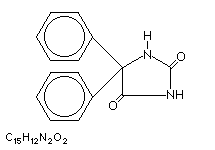
Molecular Weight: 274.3 · pKa: 8.3 · Solubility in Water: 1 in 66 · Solubility in Alcohol: 1 in 10.5 · Non-proprietary name: Phenytoin (Na).
Pharmacokinetics
Absorption: Phenytoin (Na) has an oral bioavailability is 92.5% (±2.5%).
Distribution: Phenytoin (Na) has a volume of distribution is 0.5 - 0.7 l/kg. plasma protein binding is 90 - 93 %.
Elimination: plasma half-life is 7 - 60 hr, renal excretion is < 5 %.
Advertisement
Indications
Phenytoin (Na) is primarily indicated in conditions like Convulsions, Epilepsy, Migraine prophylaxis, Myotonia, Prophylaxis of epilepsy, Status epilepticus, Status epilepticus; seizures in neurosurgery, TIC douloureaux, Ventricular arrhythmias.
Contraindications
Phenytoin (Na) is contraindicated in conditions like Porphyrias.
Dosage
Phenytoin (Na)'s dosage details are as follows:
| Dose | Single Dose | Frequency | Route | Instructions |
|---|---|---|---|---|
| Adult Dosage | ||||
| 225 mg | 225 mg | Every 24h | PO | |
| Paediatric Dosage (20kg) | ||||
| 4.125 | 4.125 | Every 12h | Oral | For Children 3-6 Yrs of Age |
| Neonatal Dosage (3kg) | ||||
| 4.5 mg/kg | 4.5 mg/kg | Every 12h | Intravenous | For 6 months and above children |
Drug Interactions
Always consult your physician for the change of dose regimen or an alternative drug of choice that may strictly be required.
Side Effects
Phenytoin (Na) in overdosage may give rise to further complications which include Ataxia , Nausea , Vomiting , Hypotension , Drowsiness , Stupor , Blurred vision , Hyperglycemia , Nystagmus , Coma .
Phenytoin (Na) produces potentially life-threatening effects which include Hepatitis , Dermatitis . Careful monitoring is needed with proper medical management.
The signs and symptoms that are produced after acute overdosage of Phenytoin (Na) are Death .
Phenytoin (Na) is known to cause more or less tolerable side effects which are usually transient. These include Elevated alkaline phosphatase, Folate deficiency, Hypocalcemia, Skin rashesX.
Warnings / Precautions
Interference in Pathology
Phenytoin (Na) may interfere in the diagnosis of Increased Alkaline Phosphatase Levels, Increased blood glucose level, Elevations of gamma glutamyl transpeptidase.
Available Brands
Storage Conditions
Drug Classification
- 1.5 — Anticonvulsants and Antiepileptics