
Phenindione
Phenindione is a prothrombopenic anticoagulant drug with same action and uses as for dicumarol. Chemically Phenindione is 2-phenyl-1, 3-indandione. It has rapid onset of action and short duration of action. The actions are erratic and its short-duration of action is of little theraoeutic advantage.
Primary Characteristics
It is of Synthetic origin and belongs to Phenylindan.
It belongs to Epoxide Reductase inhibitor pharmacological group on the basis of mechanism of action and also classified in Anticoagulants pharmacological group.
Molecular Weight: 222.2 · pKa: 4.1 · Solubility in Water: Insoluble · Solubility in Alcohol: 1 in 125 · Non-proprietary name: Phenindione.
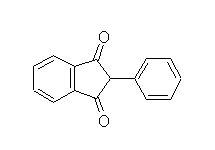
Pharmacokinetics
Absorption: Phenindione has an oral bioavailability is 101%, pre-systemic (first-pass) metabolism accounts for 3% (±2%).
Distribution: Phenindione has a plasma protein binding is > 97 %.
Elimination: plasma half-life is 5 - 6 hr, renal excretion is exclusive.
Advertisement
Indications
Phenindione is primarily indicated in conditions like Deep vein thrombosis, Prevention of embolism, Prevention of thrombosis, Prophylaxis after insertion of prosthetic heart valve, Prophylaxis and treatment of venous thrombosis and pulmonary embolism, Prophylaxis of embolisation in rheumatic heart disease and atrial fibrillation, Pulmonary embolism.
Phenindione is also indicated for secondary conditions like Rheumatic heart disease.
Contraindications
None recorded.
Dosage
Phenindione's dosage details are as follows:
| Dose | Single Dose | Frequency | Route | Instructions |
|---|---|---|---|---|
| Adult Dosage | ||||
| 1.428 mg/kg | 1.428 mg/kg | — | PO | Maintenance, as required |
| 2.142 mg/kg | 2.142 mg/kg | — | PO | Initial,for first 2 days |
| Paediatric Dosage (20kg) | ||||
| 2 mg/kg | 2 mg/kg | Every 24h | Oral | - |
| Neonatal Dosage (3kg) | ||||
| 2 mg/kg | 2 mg/kg | Every 24h | Oral | - |
Drug Interactions
Always consult your physician for the change of dose regimen or an alternative drug of choice that may strictly be required.
Side Effects
Phenindione in overdosage may give rise to further complications which include Fever , Hypersensitivity reactions , Renal impairment , Skin necrosis , Skin rashes .
Phenindione produces potentially life-threatening effects which include Blood dyscrasias, Bleeding , Hepatitis . Careful monitoring is needed with proper medical management.
Phenindione is known to cause more or less tolerable side effects which are usually transient. These include Diarrhea, Skin reactions.
Warnings / Precautions
Interference in Pathology
Phenindione may interfere in the diagnosis of Red Coloration of Urine .
Available Brands
None recorded.
Storage Conditions
Drug Classification
- 1.10.2 — Anticoagulants/Platelet deaggregators