
Penicillamine
Also known as: D-3- Mercaptovaline, D-Penicillamine
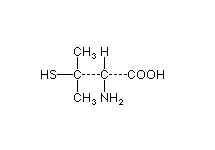
Penicillamine is a metabolite of penicillin, is an analogue of the amino acid cysteine. The drug can be resolved into D and L isomers, the D form is used clinically. It forms chelate with certain toxic metal and increases their excretion. Penicillamine is used in the treatment of metal poisoning and rehumatoid arthritis, wilson's disease or to prevent formation of kidney stone.
Primary Characteristics
Penicillamine is also known as D-3- Mercaptovaline, D-Penicillamine.
It is of Semi Synthetic origin and belongs to Aminoacid.
It belongs to Immune Modifiers pharmacological group on the basis of mechanism of action and also classified in Anti-inflammatory pharmacological group. It is also classified under Antidotes .
Molecular Weight: 149.2 · pKa: 1.8, 7.9, 10.5 · Solubility in Water: 1 in 9 · Solubility in Alcohol: 1 in 530 · Non-proprietary name: Penicillamine.
Pharmacokinetics
Absorption: Penicillamine has an oral bioavailability is 40%.
Distribution: Penicillamine has a volume of distribution is 0.8 l/kg. plasma protein binding is 85 %.
Elimination: plasma half-life is 1-6 hr, renal excretion is 10 %.
Advertisement
Indications
Penicillamine is primarily indicated in conditions like All forms of epilepsy, Cystinuria, Deficiency of growth hormone in children, Hormone replacement for menopausal symptoms, Juvenile chronic arthritis, Lead poisoning, Myoclonus, Nausea and vomiting (due to migraine), Palindromic rheumatism, Parkinson's disease (adjunctive with levodopa), Parkinson's disease (monotherapy), Polyarthritis, Rheumatoid arthritis, Sclerosis, Severe active rheumatoid arthritis, Wilson's disease.
Penicillamine is also indicated for secondary conditions like Chronic active hepatitis, Minor surgical and medical procedures.
Contraindications
None recorded.
Dosage
Penicillamine's dosage details are as follows:
| Dose | Single Dose | Frequency | Route | Instructions |
|---|---|---|---|---|
| Adult Dosage | ||||
| 550 mg | 550 mg | Every 24h | PO | |
| Paediatric Dosage (20kg) | ||||
| 5 mg/kg | 5 mg/kg | Every 8h | Oral | - |
| Neonatal Dosage (3kg) | ||||
| 5 mg/kg | 5 mg/kg | Every 8h | Oral | - |
Drug Interactions
Always consult your physician for the change of dose regimen or an alternative drug of choice that may strictly be required.
Side Effects
Penicillamine in overdosage may give rise to further complications which include Hematuria, Myasthenia gravis , Proteinuria , Rashes, Thrombocytopenia .
Penicillamine produces potentially life-threatening effects which include Thrombocytopenia , Neutropenia , Aplastic Anemia , Obliterative bronchiolitis, Goodpasture's Syndrome . Careful monitoring is needed with proper medical management.
The signs and symptoms that are produced after acute overdosage of Penicillamine are Hemolysis .
Penicillamine is known to cause more or less tolerable side effects which are usually transient. These include GI disturbance, Loss of taste, Skin rash.
Warnings / Precautions
Available Brands
Storage Conditions
Drug Classification
- 1.2.4 — Disease modifying antirheumatic drugs
- 2.4.2.5 — Lead poisoning