
Paracetamol
Also known as: Acetaminophen, Acetylparaminophenol
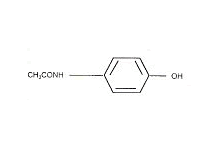
Paracetamol is analgesic and antipyretic agent. Paracetamol is the active metabolite of phenacetin, responsible for its analgesic effect. Paracetamol is a weak prostaglandin inhibitor in peripheral tissues and possesses no significant antinflammatory effects. Paracetamol is one of the most important drug used for the treatment of mild to moderate pain when an antinfalmmatory effect is not necessary. Paracetamol is preferred over aspirin as an analgesic/antipyretic for patients in whom aspirin is contraindicated, such as those who have a history of gastric ulcer or a coagulation disorder.
Primary Characteristics
Paracetamol is also known as Acetaminophen, Acetylparaminophenol.
It is of Synthetic origin and belongs to Aminophenol.
It belongs to Cyclo-oxygenase inhibitor pharmacological group on the basis of mechanism of action. It is also classified under Analgesics and Anti-inflammatory Agents .
Molecular Weight: 151.2 · pKa: 9.5 · Solubility in Water: 1 in 70 · Solubility in Alcohol: 1 in 70 · Non-proprietary name: Paracetamol.
Pharmacokinetics
Absorption: Paracetamol has an oral bioavailability is 96.5% (±1.5%), pre-systemic (first-pass) metabolism accounts for 20%.
Distribution: Paracetamol has a volume of distribution is 0.9 l/kg. plasma protein binding is < 20%.
Elimination: it is metabolised via hepatic, plasma half-life is 1.5-3.0 hr, renal excretion is 5% unchanged.
Advertisement
Indications
Paracetamol is primarily indicated in conditions like Ear pain, Fever, Headache, Malaise, Migraine, Mild to moderate pain, Pain, Post-vaccine reaction, Short-bowel syndrome, Tobacco amblyopia and leber's optic atrophy, Toothache.
Contraindications
Paracetamol is contraindicated in conditions like Hypersensitivity.
Dosage
Paracetamol's dosage details are as follows:
| Dose | Single Dose | Frequency | Route | Instructions |
|---|---|---|---|---|
| Adult Dosage | ||||
| 500 – 1000 mg | — | Every 6h | PO | Maximum adult dose is 4 g/day in divided doses (i.e. 1g every 6 hourly) |
| Paediatric Dosage (20kg) | ||||
| 10 – 15 mg/kg/dose | — | Every 6h | Oral | - |
| Neonatal Dosage (3kg) | ||||
| 12 mg/kg | 12 mg/kg | Every 6h | Oral | - |
Drug Interactions
Always consult your physician for the change of dose regimen or an alternative drug of choice that may strictly be required.
Side Effects
Paracetamol in overdosage may give rise to further complications which include Bronchospasm .
Paracetamol produces potentially life-threatening effects which include Blood dyscrasias, Liver damage, Centribular Necrosis. Careful monitoring is needed with proper medical management.
The signs and symptoms that are produced after acute overdosage of Paracetamol are Liver failure, renal tubular necrosis, hypoglycemic coma, Hepatic necrosis.
Paracetamol is known to cause more or less tolerable side effects which are usually transient. These include GI adverse effects, Skin rashes.
Warnings / Precautions
Interference in Pathology
Paracetamol may interfere in the diagnosis of False +ve results for plasma salicylates .
Available Brands
Click on a strength to view available brands.
Single Ingredient
Multi-Ingredient Combinations
Storage Conditions
Drug Classification
- 1.2.1.2 — Paracetamol
- 2.7.1 — Acute migraine attack
Manufacturers
Manufacturers of Paracetamol in Pakistan: