
Nimodipine
Nimodipine is oral calcium-channel blocking agent. Because of its selectivity for cerebral arterioles, Nimodipine is used to treat subarachnoid hemorrhage (SAH) rather than hypertension, as other dihydropyridines are used. It has negligible effects on AV node conduction, similar to other members of the dihydropyridine subgroup. It also has shown efficacy in the prophylaxis of migraine. It was approved by the FDA in December 1988. Like other calcium-channel antagonists, it inhibits the influx of extracellular calcium through myocardial and vascular membrane pores that are selective for specific ions. Serum calcium levels remain unchanged. Although the exact mechanism is unknown, Nimodipine is believed that it inhibits this influx by binding to specific receptors on the cell membrane in or near the calcium channel., which causes a conformational change in the channel, making it unavailable for opening. The decrease in intracellular calcium inhibits the contractile processes of smooth muscle cells, causing dilation of the arteries and increased oxygen delivery to the area being supplied.
Primary Characteristics
It is of Synthetic origin and belongs to Dihydropyridine.
It belongs to Calcium L-channel antagonist pharmacological group on the basis of mechanism of action.
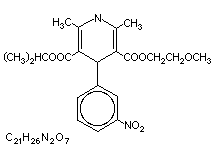
Molecular Weight: 418.5 · Solubility in Water: Insoluble · Solubility in Alcohol: soluble · Non-proprietary name: Nimodipine.
Pharmacokinetics
Absorption: Nimodipine has an oral bioavailability is 33% (±20%), pre-systemic (first-pass) metabolism accounts for 80%.
Distribution: Nimodipine has a volume of distribution is 0.9 - 2.3 l/kg. plasma protein binding is >95 %.
Elimination: it is metabolised via Hepatic, plasma half-life is 8.5 hr, renal excretion is 53 %.
Advertisement
Indications
Nimodipine is primarily indicated in conditions like Cerebral impairment, Premedication before surgery, Prevention of xerostomia, Subarachnoid haemorrhage.
Contraindications
Nimodipine is contraindicated in conditions like Hypotension.
Dosage
Nimodipine's dosage details are as follows:
| Dose | Single Dose | Frequency | Route | Instructions |
|---|---|---|---|---|
| Adult Dosage | ||||
| 0.75 mg/hr | 0.75 mg/hr | — | IV Inf | For first 2 hrs. then 2mg/hr 5-14 days |
| 60 mg | 60 mg | Every 4h | PO | Start within 4 days of subarachnoid hemorrhage and continued for 21 days |
| Paediatric Dosage (20kg) | ||||
| 0 – 0 | — | — | Not recommended for this age group | |
| Neonatal Dosage (3kg) | ||||
| 0 – 0 | — | — | Not recommended in this age group | |
Drug Interactions
Always consult your physician for the change of dose regimen or an alternative drug of choice that may strictly be required.
Side Effects
The signs and symptoms that are produced after acute overdosage of Nimodipine are Tachycardia .
Nimodipine is known to cause more or less tolerable side effects which are usually transient. These include Constipation , Dizziness, Fatigue, Flushing, GI upset, Headache, Hypotension , Joint pain, Nausea, Rashes .
Warnings / Precautions
Available Brands
Storage Conditions
Drug Classification
- 1.12.3.2 — Calcium antagonists
- 2.24.6 — Cerebrovascular drugs