
Nicotine
Nicotine is a CNS stimulant and one of the few naturaly occuring liquid alkaloid, obtained from the tobacco plant (Nicotiana spp.). it's pharmacological actions are complex and include effects on both the central and peripheral nervous system. Nicotine is classified as a stimulant of autonomic ganglia, although it possesses both stimulant and depressant actions. Nicotine is the active ingredient and addictive component in tobacco smoke. Addiction is physiological and psycological and many smokers find it difficult to stop, even when they have illnesses which are made worse by smoking. It may be administered during the withdrawal period in the form of transdermal patches or chewing gum. its inherent toxicity has been used in the control of insects.
Primary Characteristics
It is of Natural origin and belongs to Alkaloid.
It belongs to Cholinergic nicotinic agonist pharmacological group on the basis of mechanism of action and also classified in Antidotes pharmacological group.
Molecular Weight: 162.2 · pKa: 3.2, 8.0 · Solubility in Water: > 1 in 30 · Solubility in Alcohol: > 1 in 30 · Non-proprietary name: Nicotine.
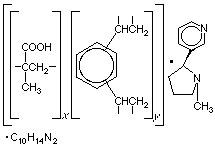
Pharmacokinetics
Absorption: Nicotine has an oral bioavailability is 100%, pre-systemic (first-pass) metabolism accounts for 38.5% (±38.5%).
Distribution: Nicotine has a volume of distribution is 2.6 l/kg. plasma protein binding is 5 %.
Elimination: it is metabolised via Hepatic, Pulmonary, Renal, plasma half-life is 2 hr, renal excretion is 17(8-26)%.
Advertisement
Indications
Nicotine is primarily indicated in conditions like Smoking cessation, Tobacco withdrawal.
Contraindications
Nicotine is contraindicated in conditions like Peptic ulcer, Gastritis.
Dosage
Nicotine's dosage details are as follows:
| Dose | Single Dose | Frequency | Route | Instructions |
|---|---|---|---|---|
| Adult Dosage | ||||
| 1 – 2 mg | — | Every 24h | Buccal | |
| 500 mg | 500 mg | Every 24h | Nasal spray | Administer in to each nostril. |
| Paediatric Dosage (20kg) | ||||
| 0 – 0 | — | — | Not recommended for this age group | |
| Neonatal Dosage (3kg) | ||||
| 0 – 0 | — | — | Not recommended in this age group | |
Drug Interactions
Always consult your physician for the change of dose regimen or an alternative drug of choice that may strictly be required.
Side Effects
Nicotine in overdosage may give rise to further complications which include Hyperglycemia , Increased blood lactate , Hypoinsulinemia, Hyperglycemia.
Nicotine produces potentially life-threatening effects which include Cardiac arrhythmias. Careful monitoring is needed with proper medical management.
The signs and symptoms that are produced after acute overdosage of Nicotine are Epileptic seizures, Sweating , Respiratory arrest, Tremor, Sweating, Hyperpnea, Circulatory collapse, Muscular spasm.
Nicotine is known to cause more or less tolerable side effects which are usually transient. These include Abdominal pain, Coolness of extremities, faintness, Hypotension , Pallor, Palpitation, Paresthesias, Salivation , SweatingX, Tremor, Vomiting .
Warnings / Precautions
Interference in Pathology
Nicotine may interfere in the diagnosis of Frings TLC Methods for measuring Urinary Alkaloid .
Available Brands
Click on a strength to view available brands.
Multi-Ingredient Combinations
Storage Conditions
Drug Classification
- 1.24.1 — Drugs used in psychotic disorders
Manufacturers
Manufacturers of Nicotine in Pakistan: