
Naloxone (HCl)
Also known as: N-Allylnoroxymorphine
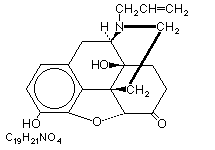
Naloxone (HCl) is a semisynthetic opiate-receptor antagonist. Naloxone (HCl) is the n-allyl derivative of oxymorphone. Classically, Naloxone (HCl) is used to reverse the clinical effects of opiate analgesics, besides treatment of opiate overdose, it has been used to reverse the effects of ethanol and benzodiazepines, to reverse hypotension associated with spinal injury, to improve neurologic recovery after ischemic stroke, and to treat hypercapnic COPD, although response in these conditions is not as dramatic or predictable as when reversing the effects of opiates. Naloxone was approved by the FDA in 1971. Naloxone antagonizes both the toxic and clinical effects of opiates. Thus, not only are respiratory depression, hypotension, and sedation reversed, but so is analgesia. Clinicians should use discretion when considering administering naloxone to patients who are sedated from opiates but do not exhibit respiratory depression. Reversal of analgesia is undesirable in patients known to be in severe pain. It should not be used for drowsiness unless opiate-induced respiratory depression coexists.
Primary Characteristics
Naloxone (HCl) is also known as N-Allylnoroxymorphine.
It is of Semi Synthetic origin and belongs to Thebaine.
It belongs to OPIATE antagonist pharmacological group on the basis of mechanism of action and also classified in Antidotes pharmacological group.
Molecular Weight: 399.9 · pKa: 7.9 · Solubility in Water: > 1 in 30 · Solubility in Alcohol: < 1 in 100 · Non-proprietary name: Naloxone (HCl) · pH: 5.2 · Isotonic value: 8.07.
Pharmacokinetics
Absorption: Naloxone (HCl) has an pre-systemic (first-pass) metabolism accounts for 20% (±20%).
Distribution: Naloxone (HCl) has a volume of distribution is 5 l/kg. plasma protein binding is 50 %.
Elimination: it is metabolised via extensive by Liver, plasma half-life is 1.5 hr, renal excretion is 70 %.
Advertisement
Indications
Naloxone (HCl) is primarily indicated in conditions like Cerebral infarction, CNS depression, Mental illness, Overdosage with opioids, Poisoning, Prohylaxis of stress ulceration, Reversal of opioid-induced respiratory depression, Spinal cord trauma.
Naloxone (HCl) is also indicated for secondary conditions like Opioid dependence, Pain, Shock.
Contraindications
None recorded.
Dosage
Naloxone (HCl)'s dosage details are as follows:
| Dose | Single Dose | Frequency | Route | Instructions |
|---|---|---|---|---|
| Adult Dosage | ||||
| 150 ug | 150 ug | — | IV | At intervals of 2-3 min when used post operatively . |
| 1.2 mg | 1.2 mg | — | IV,IM,SC | Every 2 to 3 minutes |
| Paediatric Dosage (20kg) | ||||
| 10 ug/kg | 10 ug/kg | — | Initial dose | |
| 0.1 mg/kg | 0.1 mg/kg | — | Intra Muscular | Every 2 to 3 minutes Or as required |
| 0.1 mg/kg | 0.1 mg/kg | — | Intra Venous | Every 2 to 3 minutes Or as required |
| 0.1 mg/kg | 0.1 mg/kg | — | Subcutaneous | Every 2 to 3 minutes Or as required |
| Neonatal Dosage (3kg) | ||||
| 7.5 ug/kg | 7.5 ug/kg | — | Intramuscular | Repeat according to response |
| 7.5 ug/kg | 7.5 ug/kg | — | Intravenous | Repeat according to response |
Drug Interactions
Always consult your physician for the change of dose regimen or an alternative drug of choice that may strictly be required.
Side Effects
Naloxone (HCl) in overdosage may give rise to further complications which include Hypertension .
Naloxone (HCl) produces potentially life-threatening effects which include Ventricular fibrillation, Pulmonary edema , Ventricular arrhythmias. Careful monitoring is needed with proper medical management.
Naloxone (HCl) is known to cause more or less tolerable side effects which are usually transient. These include Nausea and vomiting.
Warnings / Precautions
Available Brands
Click on a strength to view available brands.
Single Ingredient
Storage Conditions
Drug Classification
- 1.4.2.2 — Opioid analgesic overdose