
Nalbuphine (HCl)
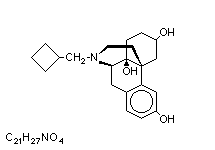
Nalbuphine (HCl) is a synthetic opiate agonist/antagonist that is chemically related to both naloxone, a narcotic antagonist, and oxymorphone, a potent narcotic analgesic. Used to treat moderate to severe pain associated with acute and chronic medical disorders such as cancer, renal or biliary colic, migraine or vascular headaches, and surgical pain. Another clinical use is obstetrical analgesia during labor and delivery. Some evidence suggests that nalbuphine's respiratory depressant effects do not increase proportionately with increasing doses, thus making this drug safer in patients at risk from respiratory depression. It was approved by the FDA in 1979. Nalbuphin exerts its effects by binding to specific opiate receptors present in the central nervous system, functions as an antagonist at the µ-receptor, however it has agonist action at ?-receptor, Nalbuphine is also an agonist at the d-receptor, but Nalbuphine (HCl) is nalbuphine's action at the ?-receptor that provides analgesia. Actions at the ?-receptors are believed to produce alterations in the perception of pain as well as the emotional response to pain, possibly by altering the release of neurotransmitters from afferent nerves sensitive to painful stimuli.
Primary Characteristics
Nalbuphine (HCl) is also known as Nalbuphine, Phenanthene.
It is of Synthetic origin and belongs to Alkaloid.
It belongs to OPIATE agonist pharmacological group on the basis of mechanism of action. It is also classified under Analgesics and Anti-inflammatory Agents .
Molecular Weight: 393.9 · pKa: 8.71 · Solubility in Water: Soluble · Solubility in Alcohol: Soluble · Non-proprietary name: Nalbuphine (HCl).
Pharmacokinetics
Distribution: Nalbuphine (HCl) has a volume of distribution is 160-500 litre. plasma protein binding is Minimal.
Elimination: it is metabolised via Extensive by Liver, plasma half-life is 2.8-8hr(oral) 2-4 hr(IV), renal excretion is 70%.
Advertisement
Indications
Nalbuphine (HCl) is primarily indicated in conditions like Adjunct to prevent relapse, Long term management of hereditary angioedema, Moderate to severe pain.
Nalbuphine (HCl) is also indicated for secondary conditions like All forms of epilepsy, Anesthesia, Myoclonus, Post-operative pain, Pre-anaesthetic medication.
Contraindications
Nalbuphine (HCl) is contraindicated in conditions like Respiratory depression, Raised intracranial pressure, Opioid dependence, Hypersensitivity.
Dosage
Nalbuphine (HCl)'s dosage details are as follows:
| Dose | Single Dose | Frequency | Route | Instructions |
|---|---|---|---|---|
| Adult Dosage | ||||
| 15 mg | 15 mg | Every 12h | IM,IV,SC | For Pain. Frequency may be increased to 3 times if needed. |
| 1.65 mg/kg | 1.65 mg/kg | — | IV | Over 10 to 15 minutes at induction , Maintanance doses of 250-500ug/kg may be given as intravanous bolus if required . |
| Paediatric Dosage (20kg) | ||||
| 0.125 mg/kg | 0.125 mg/kg | Every 6h | Intra Muscular | - |
| 0.125 mg/kg | 0.125 mg/kg | Every 6h | Intra Venous | - |
| 0.125 mg/kg | 0.125 mg/kg | Every 6h | Subcutaneous | - |
| Neonatal Dosage (3kg) | ||||
| No data. | ||||
Drug Interactions
Always consult your physician for the change of dose regimen or an alternative drug of choice that may strictly be required.
Side Effects
Nalbuphine (HCl) in overdosage may give rise to further complications which include Sinus tachycardia , Urticaria , Hypotension , Hypotension , Orthostatic hypotension , Hypertension , Depression , Sinus bradycardia , Syncope , Respiratory depression .
Nalbuphine (HCl) is known to cause more or less tolerable side effects which are usually transient. These include Blurred vision, Dizziness, Dry mouth, Dyspnea, Euphoria, Flushing, Headache, Nausea and vomiting, Pruritus , Sedation , SweatingX, Urinary urgency, VertigoX, Xerostomia .
Warnings / Precautions
Interference in Pathology
Nalbuphine (HCl) may interfere in the diagnosis of Interfere with enzymatic methods for the detection of opioids.
Available Brands
Storage Conditions
Drug Classification
- 1.1.3 — preoperative medication and sedation
- 2.1.5 — Analgesics and opioid antagonists
- 3.2.2 — Opioid analgesics