
Morphine
Morphine is a narcotic analgesic. Morphine is the principal alkaloid obtained from the unripened seed capsules of the opium poppy, Papaver somniferum. It was first isolated in 1803 and is the prototype of the opiate agonists. Today, the poppy is still the source of the drug because synthesis of Morphine is difficult. Morphine is available for administration as the hydrochloride or sulfate salt in all dosage forms. It sulfate is a strong analgesic used primarily for the relief of severe pain. Higher doses are useful for preoperative sedation and as a supplement to anesthesia. Morphine is also used for analgesia during labor. The effect on uterine contractions depends on the stage of labor when Morphine is administered. Morphine is the drug of choice for pain associated with myocardial infarction. it, as well as other opioids, can produce euphoria, feelings of well being, and tranquility, subjecting them to abuse. All opioid drugs can cause physical dependence, so their use is restricted. Morphine is a schedule C-II controlled substance and was in use for many years prior to its approval by the newly-formed FDA in 1939. Another dosage form, MorphiDex, is nearing the end of phase III investigation as of May 1997. It stimulates µ, ? receptors with little or no activity on sigma and delta receptors. Clinically, stimulation of µ and ? receptors produces analgesia, euphoria, respiratory depression, miosis, decreased gastrointestinal motility, and physical dependence.
Primary Characteristics
Morphine is also known as Morphine Sulphate.
It is of Natural origin and belongs to Alkaloid.
It belongs to OPIATE agonist pharmacological group on the basis of mechanism of action and also classified in Analgesic-Narcotic pharmacological group.
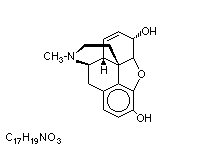
Molecular Weight: 303.4 · pKa: 7.93, 9.63 · Solubility in Water: 1 in 5000 · Solubility in Alcohol: 1 in 250 · Non-proprietary name: Morphine.
Pharmacokinetics
Absorption: Morphine has an oral bioavailability is 37.5%, pre-systemic (first-pass) metabolism accounts for 58%.
Distribution: Morphine has a volume of distribution is 2.75 l/kg. plasma protein binding is 30 %.
Elimination: it is metabolised via extensive by Liver, plasma half-life is 3 hr, renal excretion is 4%.
Advertisement
Indications
Morphine is primarily indicated in conditions like Acute pain, Acute pulmonary oedema, All forms of epilepsy, Chronic pain, Cough, Dyspnoea (breathlessness at rest) in palliative care, GI motality disorder, Insomnia, Intractable cough in palliative care, Myocardial infarction, Myoclonus, Pain, Parkinson's disease; drug-induced extrapyramidal symptoms, Pituitary desensitisation, Post-operative pain, Severe acute pain.
Morphine is also indicated for secondary conditions like Dyspnea, Dysponea, Pain in palliative care, Surgery.
Contraindications
Morphine is contraindicated in conditions like Respiratory disease, Biliary colic, Raised intracranial pressure, Coronary perfusion disorder, Head injury.
Dosage
Morphine's dosage details are as follows:
| Dose | Single Dose | Frequency | Route | Instructions |
|---|---|---|---|---|
| Adult Dosage | ||||
| 10 mg | 10 mg | Every 4h | IM | |
| 15 mg | 15 mg | Every 4h | Intra Rectal | |
| 0.6 mg | 0.6 mg | Every 12h | Intra Thecal | |
| 3.75 mg | 3.75 mg | — | IV Inf | Maintenance , at every hour |
| 10 mg | 10 mg | — | IV Inf | Load for half an hour |
| Paediatric Dosage (20kg) | ||||
| 0.15 mg/kg | 0.15 mg/kg | Every 4h | Intra Muscular | - |
| 0.3 mg/kg | 0.3 mg/kg | Every 4h | Oral | - |
| 0.15 mg/kg | 0.15 mg/kg | Every 4h | Subcutaneous | - |
| Neonatal Dosage (3kg) | ||||
| 0.15 mg/kg | 0.15 mg/kg | Every 4h | Intra Muscular | - |
| 0.3 mg/kg | 0.3 mg/kg | Every 4h | Oral | - |
| 0.15 mg/kg | 0.15 mg/kg | Every 4h | Subcutaneous | - |
Drug Interactions
Always consult your physician for the change of dose regimen or an alternative drug of choice that may strictly be required.
Side Effects
Morphine in overdosage may give rise to further complications which include Dependency .
Morphine produces potentially life-threatening effects which include Coma, Respiratory depression, Anaphylactic shock, Cyanosis. Careful monitoring is needed with proper medical management.
The signs and symptoms that are produced after acute overdosage of Morphine are Hypotension, Coma, Hypothermia, Tremor, Dysphoria , Sedation , Respiratory failure, Nausea & vomiting.
Morphine is known to cause more or less tolerable side effects which are usually transient. These include Asthma, Biliary spasm, Constipation , Hallucination , Hyperactivity, Itching, Mental clouding, Nausea, Nausea and vomiting, Postural hypotension, Pruritus , Restlessness, Urinary retensionX, Urticaria.
Warnings / Precautions
Interference in Pathology
Morphine may interfere in the diagnosis of Lowry Method of Protein Estimation , Zimmerman procedure for Urinary 17-Ketosteroid determination .
Available Brands
Storage Conditions
Drug Classification
- 1.2.2 — Opioid analgesics