
Molsidomine
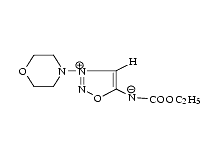
Molsidomine is a non benzene, hetrocyclic compound used manily for its vasodialator properties. It dilates the blood vessels. Molsidomine is effective in the treatment of angina (chest pain) and in heart failure following myocardial infarction. Molsidomine is prepared by chemical synthesis and not availble in any combination preparations. Molsidomine is administered orally and parentrally. It is a prodrug w/c metabolize to linsidomine.
Primary Characteristics
It is of Synthetic origin and belongs to Heterocyclic.
It belongs to EDRF (NO) agonist pharmacological group on the basis of mechanism of action and also classified in Vasodilators pharmacological group. It is also classified under Antianginal Agents .
Molecular Weight: 242.2 · pKa: 3.0 · Solubility in Water: sparingly soluble · Solubility in Alcohol: soluble · Non-proprietary name: Molsidomine.
Pharmacokinetics
Absorption: Molsidomine has an oral bioavailability is 95.5% (±4.5%), pre-systemic (first-pass) metabolism accounts for 56%.
Distribution: Molsidomine has a volume of distribution is 98 litre.
Elimination: it is metabolised via extensive by Liver, plasma half-life is 5 hr, renal excretion is 95 %.
Advertisement
Indications
Molsidomine is primarily indicated in conditions like Angina, Heart failure.
Molsidomine is also indicated for secondary conditions like Myocardial infarction.
Contraindications
Molsidomine is contraindicated in conditions like Hypersensitivity to any component of product.
Dosage
Molsidomine's dosage details are as follows:
| Dose | Single Dose | Frequency | Route | Instructions |
|---|---|---|---|---|
| Adult Dosage | ||||
| 2.5 mg | 2.5 mg | Every 2h | IV | 2 mg repeated 2 hourly |
| 2.5 mg | 2.5 mg | — | Oral | 2-4 hourly |
| Paediatric Dosage (20kg) | ||||
| 0 – 0 | — | — | Not indicated in paeds | |
| Neonatal Dosage (3kg) | ||||
| No data. | ||||
Drug Interactions
None recorded.
Side Effects
Molsidomine produces potentially life-threatening effects which include Carcinogenicity. Careful monitoring is needed with proper medical management.
The signs and symptoms that are produced after acute overdosage of Molsidomine are Hypotension.
Molsidomine is known to cause more or less tolerable side effects which are usually transient. These include Anorexia , Facial flushing, Headache, Nausea and vomiting, Orthostatic hypotension.
Warnings / Precautions
Available Brands
None recorded.
Storage Conditions
Drug Classification
- 1.1.5 — Analgesics and opioid antagonists
- 2.12.1 — Antianginal drugs