
Misoprostol
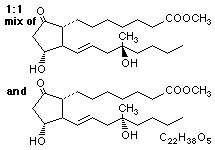
Misoprostol is a synthetic, oral prostaglandin E1 analog and exists in 1:1 mixture of two diastereoisomers. Misoprostol is used for and is commonly believed to be effective for prevention of gastric and duodenal ulcers secondary to use of nonsteroidal antiinflammatory drugs (NSAIDs), although currently Misoprostol is indicated only for the prevention of gastric ulcers. While Misoprostol is approved for use in preventing NSAID-induced gastric ulcers in high-risk patients and it has been shown to be superior than sucralfate for this condition, uncertainty exists regarding the role of it in patients receiving NSAIDs. Independent of NSAID administration, it has been used as a therapeutic agent in the treatment of active duodenal and gastric ulcers, although Misoprostol is slightly less effective than H-2-antagonists. It was approved by the FDA in December 1988.it inhibits basal and nocturnal gastric acid secretion through a direct action on the parietal cell. Parietal cells contain receptors that have high affinity for prostaglandins of the E series. It can inhibit gastric acid secretion secondary to stimulation from food, alcohol, NSAIDs, histamine, pentagastrin, or caffeine, and this effect appears to be more pronounced with increasing doses. HÁ-antagonists, however, appear to be more potent than it in the ability to inhibit gastric acid output, especially at night.
Primary Characteristics
It is of Synthetic origin and belongs to Methyl Ester.
It belongs to PGE-I-agonist pharmacological group on the basis of mechanism of action. It is also classified under Analgesics and Anti-inflammatory Agents .
Molecular Weight: 382.5 · Solubility in Water: 1 in 2500 · Solubility in Alcohol: 1 in 100 · Non-proprietary name: Misoprostol.
Pharmacokinetics
Absorption: Misoprostol has an oral bioavailability is 88%, pre-systemic (first-pass) metabolism accounts for 83% (±7%).
Distribution: Misoprostol has a volume of distribution is 858 litre. plasma protein binding is 85 %.
Elimination: it is metabolised via throughout Body, plasma half-life is 20-40 min, renal excretion is 15 %.
Advertisement
Indications
Misoprostol is primarily indicated in conditions like Benign gastric and duodenal ulceration, Haemorrhage, Peptic ulcer, Prophylaxis of NSAID-induced gastric and duodenal ulceration.
Misoprostol is also indicated for secondary conditions like Termination of pregnancy.
Contraindications
None recorded.
Dosage
Misoprostol's dosage details are as follows:
| Dose | Single Dose | Frequency | Route | Instructions |
|---|---|---|---|---|
| Adult Dosage | ||||
| 800 ug | 800 ug | Every 6h | PO | With food,for at least 4 weeks. |
| Paediatric Dosage (20kg) | ||||
| 0 – 0 | — | — | Safety not established | |
| Neonatal Dosage (3kg) | ||||
| No data. | ||||
Drug Interactions
Always consult your physician for the change of dose regimen or an alternative drug of choice that may strictly be required.
Side Effects
Misoprostol is known to cause more or less tolerable side effects which are usually transient. These include Abdominal pain, Cramps , Diarrhea, Dizziness, Dysmenorrhea, Flatulence, Headache, Hypermenorrhea, Hypotension , Nausea and vomiting, Skin rashes, Spotting .
Warnings / Precautions
Available Brands
Storage Conditions
Drug Classification
- 1.17.1.2 — Anti-peptic ulcerants