
Mefloquine (HCl)
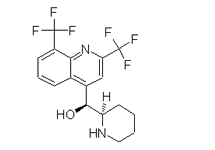
Mefloquine (HCl) is antimalarial effective in the treatment and prevention of infections resistant to Chloroquine and other antimalarials.Mefloquine (HCl) is a synthetic 4-quinoline methanol derivative, chemically related to quinine. Mefloquine (HCl) is effective against Plasmodium vivax, Plasmodium ovale, Plasmodium malariae and multidrug resistant falciparum malaria. Mefloquine (HCl) is administered orally. May increase the risk of convulsion in epileptic patients. Also a risk of fatal arrhythmias if given together with Halofantrine.
Primary Characteristics
It is of Synthetic origin and belongs to Quinolone.
It belongs to Antiplasmodial pharmacological group on the basis of mechanism of action and also classified in Antimalarial Agent pharmacological group.
Molecular Weight: 414.8 · pKa: 8.6 · Solubility in Water: Slightly soluble · Solubility in Alcohol: Soluble · Non-proprietary name: Mefloquine (HCl).
Pharmacokinetics
Absorption: Mefloquine (HCl) has an oral bioavailability is 77.5% (±2.5%).
Distribution: Mefloquine (HCl) has a volume of distribution is 16-25 l/kg. plasma protein binding is >95%.
Elimination: it is metabolised via Hepatic, plasma half-life is 15-33 days, renal excretion is 9%.
Advertisement
Indications
Mefloquine (HCl) is primarily indicated in conditions like Adjunctive therapy without valproate, Malaria caused by plasmodium falciparum, Malaria caused by plasmodium vivax, Malaria prophylaxis, To reduce degradation of pancreatic enzyme supplements, Uncomplicated malaria.
Contraindications
Mefloquine (HCl) is contraindicated in conditions like Epilepsy, Psychiatric disease, Hypersensitivity.
Dosage
Mefloquine (HCl)'s dosage details are as follows:
| Dose | Single Dose | Frequency | Route | Instructions |
|---|---|---|---|---|
| Adult Dosage | ||||
| 25 mg/kg | 25 mg/kg | Every 24h | PO | For Malaria treatment. |
| 250 mg | 250 mg | — | PO | Weekly. For Malaria Prophylaxis |
| Paediatric Dosage (20kg) | ||||
| 25 mg/kg | 25 mg/kg | — | Oral | Single dose |
| Neonatal Dosage (3kg) | ||||
| 0 – 0 | — | — | Not recommended below 1 year of child | |
Drug Interactions
Always consult your physician for the change of dose regimen or an alternative drug of choice that may strictly be required.
Side Effects
Mefloquine (HCl) in overdosage may give rise to further complications which include Convulsions , Hallucinations , Hallucinations , Stevens johnson syndrome , Stevens johnson syndrome , Leucopenia, Seizures , Behavioral disorders.
Mefloquine (HCl) produces potentially life-threatening effects which include Aplastic Anemia , Exfoliative dermatitis, Aplastic anemia, Cutaneous vasculitis. Careful monitoring is needed with proper medical management.
The signs and symptoms that are produced after acute overdosage of Mefloquine (HCl) are GI disturbances, Psychosis .
Mefloquine (HCl) is known to cause more or less tolerable side effects which are usually transient. These include Anorexia , Arthralgia, Asthenia , Constipation , Diarrhea, Dizziness, Hair loss, Headache, Hearing disturbances, Nausea, Pruritus , Pulse irregularities, Sialorrhea, Sinus bradycardia, Stomachache , Urticaria, VertigoX, Visual disturbances, Vomiting .
Warnings / Precautions
Interference in Pathology
Mefloquine (HCl) may interfere in the diagnosis of Hematocrit Value .
Available Brands
Storage Conditions
Drug Classification
- 1.6.4.3 — Antimalarials