
Lorazepam
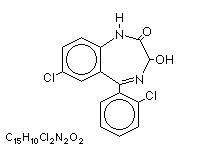
Chemically Lorazepam is identified as 7-chloro-5- (o-chlorophenyl)-1, 3-dihydro-3- hydroxy-2H-1, 4 benzodiazepin 2one. Lorazepam is oral and parenteral benzodiazepine used in the treatment of anxiety and status epilepticus. Other uses include perioperative sedation induction and anterograde amnesia. Intravenous it has replaced intravenous diazepam as the drug of choice for the treatment of status epilepticus because it persists in the CSF longer than diazepam. Some clinicians also prefer it over chlordiazepoxide or diazepam for controlling anxiety and agitation during ethanol withdrawal because Lorazepam is not metabolized to active metabolites. It was approved by the FDA in September 1977. The action is mediated through the inhibitory neurotransmitter gamma-aminobutyric acid (GABA).
Primary Characteristics
It is of Synthetic origin and belongs to Benzodiazepine.
It belongs to Chloride Channel Potentiater (GABA operated) pharmacological group on the basis of mechanism of action and also classified in Benzodiazepine pharmacological group. It is also classified under Psychotherapeutic Drugs .
Molecular Weight: 321.2 · pKa: 1.3, 11.5 · Solubility in Water: Insoluble · Solubility in Alcohol: Sparingly soluble · Non-proprietary name: Lorazepam.
Pharmacokinetics
Absorption: Lorazepam has an oral bioavailability is 45%.
Distribution: Lorazepam has a volume of distribution is 1-2 l/kg. plasma protein binding is 88-92%.
Elimination: it is metabolised via Hepatic, plasma half-life is 10-20 hr, renal excretion is 75%.
Advertisement
Indications
Lorazepam is primarily indicated in conditions like Acute nausea and vomiting, Acute panic attacks, All forms of epilepsy, Anxiety, Anxiety associated with obsessional states, Anxiety associated with phobic states, Convulsions, Insomnia, Myoclonus, Pre-operative anxiety, Psychotic illness, Sedation with amnesia, Status epilepticus.
Lorazepam is also indicated for secondary conditions like Premedication.
Contraindications
Lorazepam is contraindicated in conditions like Hypersensitivity.
Dosage
Lorazepam's dosage details are as follows:
| Dose | Single Dose | Frequency | Route | Instructions |
|---|---|---|---|---|
| Adult Dosage | ||||
| 3.5 mg | 3.5 mg | Every 24h | PO | |
| Paediatric Dosage (20kg) | ||||
| 100 ug/kg | 100 ug/kg | — | Oral | Dose for 5-12 Years of Children |
| Neonatal Dosage (3kg) | ||||
| 0 – 0 | — | — | Not recommended in this age group | |
Drug Interactions
Always consult your physician for the change of dose regimen or an alternative drug of choice that may strictly be required.
Side Effects
Lorazepam produces potentially life-threatening effects which include Acute anaphylactic reactions. Careful monitoring is needed with proper medical management.
The signs and symptoms that are produced after acute overdosage of Lorazepam are CNS depression, Dysarthria , Ataxia, Drowsiness.
Lorazepam is known to cause more or less tolerable side effects which are usually transient. These include Blurred vision, Confusion, Dizziness, Drowsiness, Headache, Nausea.
Warnings / Precautions
Interference in Pathology
Lorazepam may interfere in the diagnosis of Liver Function Test (LFT) , Periodic blood count, Elevation of LDH.
Available Brands
Storage Conditions
Drug Classification
- 1.24.3 — Drugs used in anxiety and sleep disorders