
Isoflurane
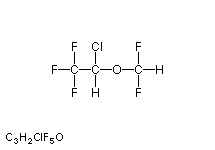
Isoflurane is inhalation anesthetic. Isoflurane is most recent halogenated anesthetic to be introduced into clinical practice. It was introduced into widespread clinical use in 1983. Chemically Isoflurane is 2-chloro-2-(difluoromethoxy)-1,1,1-trifluoroethane. Isoflurane is isomer of enflurane. Isoflurane is non flammable and non explosive. Isoflurane is a racemic mixture and prepared by chemical synthesis. Inhaled gases are the mainstay of anesthesia and are primarily used for the maintenance of anesthesia after administration of an intravenous agent. The depth of anesthesia can be rapidly altered by changing the concentration of inhaled anesthetic. Most of the agents are rapidly eliminated from the body and donot cause post-operative respiratory depression.
Primary Characteristics
It is of Synthetic origin and belongs to Enflurane.
It belongs to General Anesthetics-Volatile pharmacological group on the basis of mechanism of action. It is also classified under General Anesthetics .
Molecular Weight: 184.5 · Solubility in Water: Insoluble · Solubility in Alcohol: readily miscible · Non-proprietary name: Isoflurane.
Pharmacokinetics
Elimination: it is metabolised via 0.2%.
Advertisement
Indications
Isoflurane is primarily indicated in conditions like Induction and maintenance of anaesthesia.
Contraindications
Isoflurane is contraindicated in conditions like Coronary artery disease, Suceptibility to malignant hyperthermia, Neurological procedures.
Dosage
Isoflurane's dosage details are as follows:
| Dose | Single Dose | Frequency | Route | Instructions |
|---|---|---|---|---|
| Adult Dosage | ||||
| 1.75 % | 1.75 % | — | For maintenance of aneasthesia. | |
| 0.35 % | 0.35 % | — | Inhalation | Aa required , For induction which may be increased to 1.5-3% v/V. |
| Paediatric Dosage (20kg) | ||||
| No data. | ||||
| Neonatal Dosage (3kg) | ||||
| No data. | ||||
Drug Interactions
Always consult your physician for the change of dose regimen or an alternative drug of choice that may strictly be required.
Side Effects
Isoflurane in overdosage may give rise to further complications which include Hepatitis , Cardiovascular collapse .
Isoflurane produces potentially life-threatening effects which include Respiratory depression, Myocardial infarction, Ischemic heart disease, Malignant hyperthermia. Careful monitoring is needed with proper medical management.
The signs and symptoms that are produced after acute overdosage of Isoflurane are Depression of vital functions.
Isoflurane is known to cause more or less tolerable side effects which are usually transient. These include Nausea, Shivering , Vomiting .
Warnings / Precautions
Interference in Pathology
Isoflurane may interfere in the diagnosis of Polarographic and Mass Spectrometric analysis of oxygen and Nitrogen. .
Available Brands
Click on a strength to view available brands.
Single Ingredient
Storage Conditions
Drug Classification
- 1.1.1.1 — Intravenous agents
Manufacturers
Manufacturers of Isoflurane in Pakistan: