
Indapamide
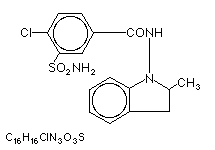
Indapamide is antihypertensive agent. It was synthesized in 1969. Indapamide is the first of a new class of diuretic or antihypertensives, the indolines. It increases the urination and reduces the amount of water and sodium retained by the body. its diuretic effects is similar to that induced by thiazides. Chemically Indapamide is identified as 3-(aminosulfonyl) -4-chloro-N-(2,3-dihydro-2-methyl-1H-indol-1-yl)-benzamide hemihydrate. Indapamide is a 2-methyl indoline derivative of 4-chloro-3-sulfamoyl benzoyl benzamide and differ from the classic Thiazides in lacking a benzothiadiazine hetrocycle and in contaning only one sulfamoyl group.
Primary Characteristics
It is of Synthetic origin and belongs to Sulphonamide.
It belongs to NaCl cotransport inhibitor pharmacological group on the basis of mechanism of action and also classified in Diuretic Thiazide pharmacological group.
Molecular Weight: 365.8 · pKa: 8.3 · Non-proprietary name: Indapamide.
Pharmacokinetics
Absorption: Indapamide has an oral bioavailability is 73% (±2%).
Distribution: Indapamide has a volume of distribution is 60 litre. plasma protein binding is 76-79%.
Elimination: it is metabolised via Hepatic (extensive), plasma half-life is 14 hr, renal excretion is 60-70% through urine, 5-7% excreated unchanged..
Advertisement
Indications
Indapamide is primarily indicated in conditions like Essential hypertension, Hypertension, Oedema in congestive heart failure, Oedema in pregnancy.
Contraindications
Indapamide is contraindicated in conditions like Renal failure, Hepatic failure, Hypersensitivity.
Dosage
Indapamide's dosage details are as follows:
| Dose | Single Dose | Frequency | Route | Instructions |
|---|---|---|---|---|
| Adult Dosage | ||||
| 1.5 – 2.5 mg | — | — | PO | Once as Single Dose in Morning , For hyper tension & edema may be increased to 5 mg. |
| Paediatric Dosage (20kg) | ||||
| No data. | ||||
| Neonatal Dosage (3kg) | ||||
| 0 – 0 | — | — | Not use in neonates | |
Drug Interactions
Always consult your physician for the change of dose regimen or an alternative drug of choice that may strictly be required.
Side Effects
Indapamide in overdosage may give rise to further complications which include Hypokalemia , Hypercalcemia , Increased BUN (blood urea nitrates), Hyperuricemia, Hypoglycemia, Flaccid paralysis.
Indapamide produces potentially life-threatening effects which include Coma, Cardiac Arrest , Cardiac arrest. Careful monitoring is needed with proper medical management.
The signs and symptoms that are produced after acute overdosage of Indapamide are Respiratory depression, Hypokalemia , Respiratory depression, Nausea & vomiting, Hyperuricemia, Muscle fatigue, Weakness , Respiratory depression, Acute gout.
Indapamide is known to cause more or less tolerable side effects which are usually transient. These include Agitation , Bleeding , Blurred vision, dizziness, Fatigue, Fever, Headache, Lassitude , Skin rash.
Warnings / Precautions
Interference in Pathology
Indapamide may interfere in the diagnosis of Increased level of Blood urea nitrogen (BUN) concentrations, Increased in serum creatinin, Electrolytes distabance.
Available Brands
Storage Conditions
Drug Classification
- 1.16.1 — Thiazide and related diuretics
Manufacturers
Manufacturers of Indapamide in Pakistan: