
Imipramine (HCl)
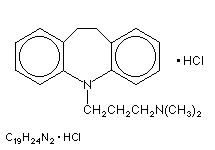
Imipramine (HCl) was recognized as an antidepressant in 1950s and is the prototype drug of tricyclic antidepressants of the class dibenzazepine class. Tricyclic antidepressant is used for almost four decades. Chemically itclosely related to the phenothiazines. itthe first of the tricyclic antidepressants to be used. Imipramine (HCl) has characteristic three ring nucleus. itprepared by chemical synthesis. italso used in the treatment of childhood enuresis, anxiety in panic syndrome, and chronic pain.
Primary Characteristics
It is of Synthetic origin and belongs to Tricyclic amines.
It belongs to Amine uptake inhibitor pharmacological group on the basis of mechanism of action and also classified in Antidepressant pharmacological group. It is also classified under Psychotherapeutic Drugs .
Molecular Weight: 316.9 · pKa: 9.4 · Solubility in Water: 1 in 2 · Solubility in Alcohol: 1 in 1.5 · Non-proprietary name: Imipramine (HCl) · pH: 3.6.
Pharmacokinetics
Absorption: Imipramine (HCl) has an oral bioavailability is 94% (±4%), pre-systemic (first-pass) metabolism accounts for 25% (±25%).
Distribution: Imipramine (HCl) has a volume of distribution is 21 l/kg. plasma protein binding is 75-95%.
Elimination: it is metabolised via Presystemic metabolism 50%, plasma half-life is 8-20 hr, renal excretion is 70%.
Advertisement
Indications
Imipramine (HCl) is primarily indicated in conditions like Anorexia nervosa, Attention deficit disorders, Bulimia nervosa, Depression, Enuresis, Headache, Hyperactivity, Hypercalcaemia, Neuropathic pain, Neurosis, Obsessional states, Osteolytic lesions, Pain, Panic disorders, Phobias.
Contraindications
Imipramine (HCl) is contraindicated in conditions like Epilepsy, Mania, Prostatic hypertrophy, Narrow-angle glaucoma, Bundle branch block, Post myocardial infarction, Hypersensitivity, Urinary retention.
Dosage
Imipramine (HCl)'s dosage details are as follows:
| Dose | Single Dose | Frequency | Route | Instructions |
|---|---|---|---|---|
| Adult Dosage | ||||
| 75 mg | 75 mg | — | A single dose at bed time, usual maintanace. | |
| 75 mg | 75 mg | Every 24h | PO | Gradually increased to 150 to 200mg |
| Paediatric Dosage (20kg) | ||||
| 25 mg | 25 mg | — | For children 6 to 7 years (20-25kg) | |
| 50 | 50 | — | For children aged 8 to 11 years (25-35kg) | |
| 1.5 mg/kg | 1.5 mg/kg | Every 24h | Oral | Recommended for 5-12 Years Children at Bed Time |
| Neonatal Dosage (3kg) | ||||
| 0 – 0 | — | — | Not recommended in this age group | |
Drug Interactions
Always consult your physician for the change of dose regimen or an alternative drug of choice that may strictly be required.
Side Effects
Imipramine (HCl) in overdosage may give rise to further complications which include Tachycardia , Oedema , Bundle branch blockage , Postural hypotension , Tachycardia.
Imipramine (HCl) produces potentially life-threatening effects which include Agranulocytosis. Careful monitoring is needed with proper medical management.
The signs and symptoms that are produced after acute overdosage of Imipramine (HCl) are Hypotension, Tachycardia , Cardiac arrhythmias, Convulsions , Coma, Mydriasis, Hyperreflexia , Sinus tachycardia, hyperreflexia.
Imipramine (HCl) is known to cause more or less tolerable side effects which are usually transient. These include Abdominal pain, Agitation , Blurred vision, Constipation , Cutaneous vasculitis, Delayed ejaculation, Drowsiness, Dry mouth, Enlarged prostate gland, Eosinophilia, Fatigue, Hepatotoxicity, Hypotension , Impairment of memory, Impotence, Increased anxiety, Leukopenia, Loss of accomodation, Photosensitivity, Restlessness, Sleep disturbance, Tremor, Urinary hesitancy, Urinary retention, Urinary RetentionX, Urticaria, Weight gain.
Warnings / Precautions
Available Brands
Storage Conditions
Drug Classification
- 1.24.2.1 — Drugs used in depression