
Ergotamine (Tartrate)
Also known as: Cafergot, Migril®,
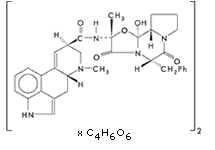
Ergotamine (Tartrate) is alkaloid derived from ergot, consisting of lysergic acis, ammonia, proline, phenylalanine and pyruvic acid combined in amide linkages. Ergotamine (Tartrate) is used as an analgesic in the treatment of migraine and cluster headaches.
Primary Characteristics
Ergotamine (Tartrate) is also known as Cafergot, Migril®, .
It is of Synthetic origin and belongs to Ergot Alkaloid.
It belongs to Serotonin agonsit pharmacological group on the basis of mechanism of action and also classified in Ergot Derivative pharmacological group. It is also classified under Analgesics and Anti-inflammatory Agents .
Molecular Weight: 1313.43 · pKa: 6.8 · Solubility in Water: 1 in 500 · Solubility in Alcohol: 1 in 500 · Non-proprietary name: Ergotamine (Tartrate).
Pharmacokinetics
Distribution: Ergotamine (Tartrate) has a volume of distribution is 1.85L/kg. plasma protein binding is 93 to 98%.
Elimination: it is metabolised via Hepatic 90%, plasma half-life is 2 & 21 hours, renal excretion is 5% excreted in urine.
Advertisement
Indications
Ergotamine (Tartrate) is primarily indicated in conditions like Migraine, Prophylactic treatment of vascular headache, Vascular headaches.
Contraindications
Ergotamine (Tartrate) is contraindicated in conditions like Hypertension, Renal diseases, Hepatic disease, Chronic pulmonary disease, Vascular disease, Collagen disease, Cachexia, Valvular heart disease.
Dosage
Ergotamine (Tartrate)'s dosage details are as follows:
| Dose | Single Dose | Frequency | Route | Instructions |
|---|---|---|---|---|
| Adult Dosage | ||||
| 1.5 mg | 1.5 mg | — | Initially as Required | |
| 1.5 mg | 1.5 mg | Every 6h | PO | Maintenance for a Week |
| 2 mg | 2 mg | Every 6h | Rectally | Not more than 4mg in 24 hours. Repeat half an hour or laier. Not more than 6mg should be given in 24 hours |
| Paediatric Dosage (20kg) | ||||
| No data. | ||||
| Neonatal Dosage (3kg) | ||||
| No data. | ||||
Drug Interactions
Always consult your physician for the change of dose regimen or an alternative drug of choice that may strictly be required.
Side Effects
Ergotamine (Tartrate) in overdosage may give rise to further complications which include Ventricular fibrillation , Retroperitoneal fibrosis , Pleuropulmonary fibrosis , Endocardial fibrosis , Cerebral hemorrhage, Stroke.
Ergotamine (Tartrate) produces potentially life-threatening effects which include Myocardial infarction, Renal failure, Vascular occlusions, Gangrene of extremities, Necrosis of bowel. Careful monitoring is needed with proper medical management.
The signs and symptoms that are produced after acute overdosage of Ergotamine (Tartrate) are Nausea, Vomiting, Tachycardia , Diarrhea, Coma, Extreme Thirst, Confusion , Pallor, Cold extremities, Tingling.
Ergotamine (Tartrate) is known to cause more or less tolerable side effects which are usually transient. These include Abdominal pain, Cyanosis, Muscle pain, Nausea, Numbness , Oedema, Poresthesia, Vomiting , Weakness.
Warnings / Precautions
Interference in Pathology
Ergotamine (Tartrate) may interfere in the diagnosis of False-negative skin test.
Available Brands
Storage Conditions
Drug Classification
- 1.7.1 — Acute migraine attack