
Doxepin (HCl)
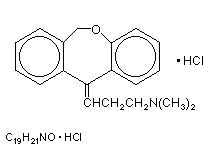
Doxepin (HCl) is a tricyclic antidepressant of the dibenzoxepine class, also having significant anxiolytic activity. Doxepin (HCl) is effective in treating depression and to treat nerve pain, and insomnia. Two to three weeks are required to observe the full effects of drug. Doxepin (HCl) is administered orally.
Primary Characteristics
It is of Synthetic origin and belongs to Dibenzoxepin.
It belongs to Amine uptake inhibitor pharmacological group on the basis of mechanism of action and also classified in Antidepressant pharmacological group. It is also classified under Psychotherapeutic Drugs .
Molecular Weight: 279 · pKa: 8 · Solubility in Water: 1 in 1.5 · Solubility in Alcohol: 1 in 1 · Non-proprietary name: Doxepin (HCl).
Pharmacokinetics
Absorption: Doxepin (HCl) has an oral bioavailability is 50% (±50%), pre-systemic (first-pass) metabolism accounts for 71% (±16%).
Distribution: Doxepin (HCl) has a volume of distribution is 9.1-33.3 l/kg. plasma protein binding is high.
Elimination: it is metabolised via extensive by liver, plasma half-life is 8.2-24.5 hr, renal excretion is major.
Advertisement
Indications
Doxepin (HCl) is primarily indicated in conditions like Depressive illness, Mild anxiety.
Doxepin (HCl) is also indicated for secondary conditions like Atopic dermatitis, Eczema, Insomnia, Lichen simplex, Migraine prophylaxis.
Contraindications
Doxepin (HCl) is contraindicated in conditions like Glucoma, Mania, Urinary retention.
Dosage
Doxepin (HCl)'s dosage details are as follows:
| Dose | Single Dose | Frequency | Route | Instructions |
|---|---|---|---|---|
| Adult Dosage | ||||
| 0.785 mg/kg | 0.785 mg/kg | Every 8h | PO | Maintenance |
| 1.071 mg/kg | 1.071 mg/kg | Every 24h | PO | Initial |
| Paediatric Dosage (20kg) | ||||
| 0 – 0 | — | — | Not recommended in this age group | |
| Neonatal Dosage (3kg) | ||||
| No data. | ||||
Drug Interactions
Always consult your physician for the change of dose regimen or an alternative drug of choice that may strictly be required.
Side Effects
Doxepin (HCl) in overdosage may give rise to further complications which include Heart failure .
The signs and symptoms that are produced after acute overdosage of Doxepin (HCl) are Cardiac arrhythmias, Convulsions , Coma, Hyperthermia, Drowsiness, Blurred vision, Drowsiness, Dry mouth, Urinary retention, Respiratory depression, Respiratory depression, Mydriasis, Hypertension, Stupor , Decreased GI motility, Hyperreflexia , Respiratory depression, hyperreflexia.
Doxepin (HCl) is known to cause more or less tolerable side effects which are usually transient. These include Agitation , Blurred vision, Confusion, Constipation , Dizziness, Drowsiness, Dry mouth, Extrapyramidal reactions, Headache, Hypotension , Insomnia, Psychotic symptoms, Rashes , Tachycardia.
Warnings / Precautions
Available Brands
None recorded.
Storage Conditions
Drug Classification
- 1.24.2.1 — Drugs used in depression