
Dexamphetamine (Sulphate)
Also known as: Dexamfetamine (Sulphate), Dextro Amphetamine Sulphate
Dexamphetamine (Sulphate) used in the treatment of nacrolepsy and as an adjunct in the management of hyperactivity disorders in childrens (above the age of 6 years).
Primary Characteristics
Dexamphetamine (Sulphate) is also known as Dexamfetamine (Sulphate), Dextro Amphetamine Sulphate.
It is of Synthetic origin and belongs to Phenylethylamine.
It belongs to Amine release pharmacological group on the basis of mechanism of action. It is also classified under CNS Stimulant .
Molecular Weight: 368.5 · pKa: 9.9 · Solubility in Water: 1 in 10 · Solubility in Alcohol: 1 in 800 · Non-proprietary name: Dexamphetamine (Sulphate).
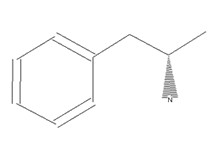
Pharmacokinetics
Distribution: Dexamphetamine (Sulphate) has a volume of distribution is 5 l/kg. plasma protein binding is 15-40%.
Elimination: it is metabolised via hepatic, plasma half-life is 12-13 hr, renal excretion is 5-30%.
Advertisement
Indications
Dexamphetamine (Sulphate) is primarily indicated in conditions like Attention deficit disorders, Narcolepsy.
Contraindications
Dexamphetamine (Sulphate) is contraindicated in conditions like Angina, Diabetes mellitus, Glucoma, Hypertension, Hyperthyroidism, Insomnia, Anorexia, Psychopathic personality, Gille de la tourette syndrome, Cardiovascular disease, Dyskinesia.
Dosage
Dexamphetamine (Sulphate)'s dosage details are as follows:
| Dose | Single Dose | Frequency | Route | Instructions |
|---|---|---|---|---|
| Adult Dosage | ||||
| 7.5 mg | 7.5 mg | Every 8h | PO | Initial daose increased if necessary by 5 to 10 mg At weekly intervals to a maxinum of 60mg daily. |
| Paediatric Dosage (20kg) | ||||
| 5 mg | 5 mg | — | Hyperactivity dose may be increased by 5mg at weekly intervals to upper limity of 20mg & 40mg in chi | |
| Neonatal Dosage (3kg) | ||||
| No data. | ||||
Drug Interactions
Always consult your physician for the change of dose regimen or an alternative drug of choice that may strictly be required.
Side Effects
Dexamphetamine (Sulphate) in overdosage may give rise to further complications which include Hallucinations , Hallucinations , Hypertension , Arrythmia.
Dexamphetamine (Sulphate) produces potentially life-threatening effects which include Intracranial hemorrhages, Intracerebral bleeding, Acute Renal Failure , Acute renal failure. Careful monitoring is needed with proper medical management.
The signs and symptoms that are produced after acute overdosage of Dexamphetamine (Sulphate) are Convulsions , Hallucinations , Delirium, Hyperpyrexia, Mydriasis, Hyperreflexia , hyperreflexia.
Dexamphetamine (Sulphate) is known to cause more or less tolerable side effects which are usually transient. These include Abdominal pain, Anorexia , Blurred vision, Dysphoria , Headache, Insomnia, Irritability, Mydriasis, Nervousness, Palpitation, Sleep disturbancesX, Sweating , Tachycardia, Weight loss, Weight LossX.
Warnings / Precautions
Available Brands
None recorded.
Storage Conditions
Drug Classification
- 1.24.2.1 — Drugs used in depression