
Ranolazine
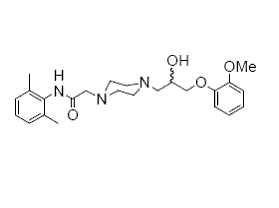
Ranolazine is used as an adjunctive anti-anginal treatment for patient with symptomatic stable angina pectoris who are inadequately controlled or intolerant to first-line anti-anginal tharapies. Ranolazine is a racemic mixture, chemically described as 1-piperazineacetamide, N-(2,6dimethylphenyl)-4-[2-hydroxy-3-(2-methoxyphenoxy)propyl]-, (±)-. It has an empirical formula of C24H33N3O4. The mechanism of action of ranolazine's antianginal effects has not been determined. Ranolazine has anti-ischemic and antianginal effects that do not depend upon reductions in heart rate or blood pressure. Ranolazine at therapeutic levels can inhibit the cardiac late sodium current (INa). However, the relationship of this inhibition to angina symptoms is uncertain.
Primary Characteristics
Ranolazine is also known as Ranolazine Dihydrochloride.
It is classified in Anti anginal pharmacological group.
Molecular Weight: 427.54 · pKa: 14.25 · Solubility in Water: very slightly soluble. · Solubility in Alcohol: slightly · Non-proprietary name: Ranolazine.
Pharmacokinetics
Absorption: Ranolazine has an oral bioavailability is 76%.
Distribution: Ranolazine has a plasma protein binding is 62%.
Elimination: it is metabolised via CYP3A and to a lesser extent by CYP2D6., plasma half-life is 7 hours, renal excretion is 75%.
Advertisement
Indications
Ranolazine is primarily indicated in conditions like Angina, Stable angina.
Contraindications
Ranolazine is contraindicated in conditions like Hypokalaemia, Hypomagnesaemia, Hepatic impairment, Ventricular tachycardia, Acute myocardial infarction, Severe renal impairment.
Dosage
Ranolazine's dosage details are as follows:
| Dose | Single Dose | Frequency | Route | Instructions |
|---|---|---|---|---|
| Adult Dosage | ||||
| 750 mg | 750 mg | Every 12h | oral | May be taken with or without food. Dose adjustments may be needed when taken with other drugs. |
| Paediatric Dosage (20kg) | ||||
| No data. | ||||
| Neonatal Dosage (3kg) | ||||
| No data. | ||||
Drug Interactions
Always consult your physician for the change of dose regimen or an alternative drug of choice that may strictly be required.
Side Effects
Ranolazine in overdosage may give rise to further complications which include Hematuria, Blurred vision , Tremors , QT prolongation, Pulmonary fibrosis .
The signs and symptoms that are produced after acute overdosage of Ranolazine are Dizziness, Paresthesia, Nausea, Confusion , Vomiting, Syncope .
Ranolazine is known to cause more or less tolerable side effects which are usually transient. These include Abdominal pain, Asthenia , Dizziness, Dry mouth, Headache, Nausea, Tinnitus, Vertigo, Vomiting .
Warnings / Precautions
Available Brands
Storage Conditions
Drug Classification
- 1.12.1 — Antianginal drugs