
Cinoxacin
Also known as: Azolinic Acid
Cinoxacin is an antibacterial quinolone. Cinoxacin is similar in structure and function to nalidixic acid. Because of its relatively weak antibacterial activity, it was useful only for the treatment of urinary tract infections. Cinoxacin is rarely used now, have been made obsolete by the more efficacious flourinated quinolones.
Primary Characteristics
Cinoxacin is also known as Azolinic Acid.
It is of Synthetic origin and belongs to Naphthyridine.
It belongs to DNA Gyrase inhibitor pharmacological group on the basis of mechanism of action and also classified in Antibiotics pharmacological group.
Molecular Weight: 262 · pKa: 4.7 · Solubility in Water: 1 in 345000 · Solubility in Alcohol: 1 in 100 · Non-proprietary name: Cinoxacin.
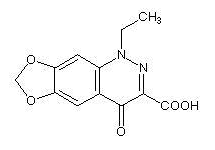
Pharmacokinetics
Absorption: Cinoxacin has an oral bioavailability is 95%.
Distribution: Cinoxacin has a volume of distribution is 0.2-0.25 l/kg. plasma protein binding is 63%.
Elimination: it is metabolised via 40% hepatic, plasma half-life is 1.5 hr, renal excretion is entire.
Advertisement
Indications
Cinoxacin is primarily indicated in conditions like Cystitis, Pyelitis, Pyelonephritis, Urinary tract infection.
Contraindications
Cinoxacin is contraindicated in conditions like Renal impairment, Hypersensitivity.
Dosage
Cinoxacin's dosage details are as follows:
| Dose | Single Dose | Frequency | Route | Instructions |
|---|---|---|---|---|
| Adult Dosage | ||||
| 500 mg | 500 mg | Every 12h | PO | For treatment of urinary tract infections prophylaxis. |
| Paediatric Dosage (20kg) | ||||
| 0 – 0 | — | — | — | Not Recommended in this Age Group |
| Neonatal Dosage (3kg) | ||||
| 0 – 0 | — | — | Not recommended inthis age group | |
Drug Interactions
Always consult your physician for the change of dose regimen or an alternative drug of choice that may strictly be required.
Side Effects
Cinoxacin in overdosage may give rise to further complications which include Epidermal necrolysis , Epidermal necrolysis .
Cinoxacin produces potentially life-threatening effects which include Anaphylactoid reactions . Careful monitoring is needed with proper medical management.
Cinoxacin is known to cause more or less tolerable side effects which are usually transient. These include Confusion, Diarrhea, dizziness, Elevation of liver enzymes, Headache, Hepatic damage, Increased intracranial pressure, Nausea, nervousness, Raised blood urea nitrogen , Raised serum creatinine, Skin rashes, Tendon damage, Tinnitus.
Warnings / Precautions
Interference in Pathology
Cinoxacin may interfere in the diagnosis of Reduction method, False + Result in urinary glucose tests using copper reduction method.
Available Brands
None recorded.
Storage Conditions
Drug Classification
- 1.6.2.1.4 — Other inhibitors of cell wall synthesis