
Chlorhexidine
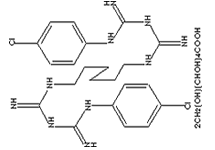
Chlorhexidine is a cationic biguanide antiseptic. Chlorhexidine is antibacterial agent and topical disinfectant. Chlorhexidine is active against vegetative bacterias and mycobecterias and has moderate activity against fungi and viruses. Chlorhexidine is most effective agianst gram positive bacterias.<br>Chlorhexidine digluconate (CHG) are cationic disinfectants widely used in aqueous personal products such as eye drops, lotions and creams.<br>Chlorhexidine Acetate is a topical antiseptic, bactericide, strong function of broad-spectrum bacteriostasis, sterilization, used for disinfecting hands, skin, washing wounds.
Primary Characteristics
Chlorhexidine is also known as Chlorhexidine Acetate, Chlorhexidine Digluconate, Chlorhexidine Gluconate.
It is of Synthetic origin and belongs to Biguanide.
Molecular Weight: 897.8 · Solubility in Water: miscible · Solubility in Alcohol: 1 in 5 · Non-proprietary name: Chlorhexidine.
Pharmacokinetics
Absorption: Chlorhexidine has an oral bioavailability is 15% (±15%).
Elimination: it is metabolised via Hepatic, renal excretion is < 1%.
Advertisement
Indications
Chlorhexidine is primarily indicated in conditions like Abrasion, Bladder irrigation, Bleeding, Burns, Cuts, Gingivitis, Infected cracked skin, Minor burns, Minor scalds, Pleural and peritoneal irrigation, Skin infections, Skin lesions, Sunburn blisters, Ulcers, Urethral infection, Wounds irrigation in surgery.
Chlorhexidine is also indicated for secondary conditions like Oral hygiene.
Contraindications
Chlorhexidine is contraindicated in conditions like Hypersensitivity.
Dosage
Chlorhexidine's dosage details are as follows:
| Dose | Single Dose | Frequency | Route | Instructions |
|---|---|---|---|---|
| Adult Dosage | ||||
| 2.01 % | 2.01 % | — | Topical | As Required |
| Paediatric Dosage (20kg) | ||||
| 0.035 % | 0.035 % | — | Topical | As Required |
| Neonatal Dosage (3kg) | ||||
| No data. | ||||
Drug Interactions
Always consult your physician for the change of dose regimen or an alternative drug of choice that may strictly be required.
Side Effects
Chlorhexidine in overdosage may give rise to further complications which include Hemolysis .
The signs and symptoms that are produced after acute overdosage of Chlorhexidine are Slurred speech, Photophobia, Photophobia, Hypersensitivity reactions, Shortness of breadth, Shortness of breadth, Hemolysis , Allergic skin reactions.
Chlorhexidine is known to cause more or less tolerable side effects which are usually transient. These include Allergic reactions, Dermatitis, Irritation of sensitive tissues, Nausea, Photosensitivity, Skin irritation, Skin sensitization, Staining of oral surfaces, Staining of tongue, Swelling of face, Taste disturbances, Teeth discoloration, Vomiting .
Warnings / Precautions
Interference in Pathology
Chlorhexidine may interfere in the diagnosis of Its presence in urine interfere with Stix Tests for proteinuria .
Available Brands
Click on a strength to view available brands.
Single Ingredient
Storage Conditions
Drug Classification
- 1.6.3 — Antifungal drugs
- 2.13.2.1 — Antibacterials, topical
- 3.15 — Disinfectants and antiseptics