
Tiagabine (HCl)
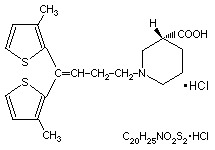
A nipecotic acid derivative and was rationally designed as an inhibitor of GABA uptake. It is used as second line drug in the treatment of epilepsy, as adjunctive therapy for refractory partial seizures with or without secondary generalization.
Primary Characteristics
It is of Synthetic origin.
Molecular Weight: 412 · Non-proprietary name: Tiagabine (HCl).
Pharmacokinetics
Distribution: Tiagabine (HCl) has a volume of distribution is 1.3(0.9-1.7)l/kg. plasma protein binding is 96 %.
Elimination: plasma half-life is 7 - 9 hr, renal excretion is 2 % unchanged.
Advertisement
Indications
Tiagabine (HCl) is primarily indicated in conditions like Epilepsy, Refractory partial seizures.
Contraindications
None recorded.
Dosage
Tiagabine (HCl)'s dosage details are as follows:
| Dose | Single Dose | Frequency | Route | Instructions |
|---|---|---|---|---|
| Adult Dosage | ||||
| 4 mg | 4 mg | Every 24h | PO | Increase by 4 to 8 mg at wk intervals until clinical response achieved. |
| Paediatric Dosage (20kg) | ||||
| No data. | ||||
| Neonatal Dosage (3kg) | ||||
| No data. | ||||
Drug Interactions
Always consult your physician for the change of dose regimen or an alternative drug of choice that may strictly be required.
Side Effects
Tiagabine (HCl) in overdosage may give rise to further complications which include Nystagmus , Tremors .
Tiagabine (HCl) is known to cause more or less tolerable side effects which are usually transient. These include Bruising, Chills, Confusion, Depression, Diarrhea, Dizziness, Fever, Nausea and vomiting, Nervousness.
Warnings / Precautions
Available Brands
None recorded.
Storage Conditions
Drug Classification
- 1.5 — Anticonvulsants and Antiepileptics