
Rifabutin
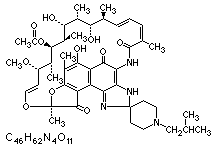
Rifabutin is rifamycin antibiotic with a spectrum of antibacterial activity similar to that of rifampicin. Rifabutin is used for the prophylaxis of Mycobacterium avium complex (MAC) infection in immunocompromised patients and for the treatment of opportunistic mycobacterial infections including tuberculosis (T.B).
Primary Characteristics
It is of Semi Synthetic origin.
Molecular Weight: 847 · pKa: - 6.9 · Solubility in Water: slighty · Solubility in Alcohol: sparingly · Non-proprietary name: Rifabutin.
Pharmacokinetics
Absorption: Rifabutin has an oral bioavailability is 25% (±25%), pre-systemic (first-pass) metabolism accounts for 30% (±30%).
Distribution: Rifabutin has a volume of distribution is 8-9 l/kg. plasma protein binding is 70 %.
Elimination: plasma half-life is 36 hr.
Advertisement
Indications
Rifabutin is primarily indicated in conditions like Infection with non-t.b. Mycobacteria, Prophylaxis of TB, Pulmonary TB.
Rifabutin is also indicated for secondary conditions like Adjunct in the treatment of opiod dependence, Adjunctive therapy without valproate, Brucellosis, Cytotoxic-induced neutropenia, Legionellae, Leprosy, Reversal of non-depolarizing neuromuscular blockade, Staphylococcal infections.
Contraindications
None recorded.
Dosage
None recorded.
Drug Interactions
Always consult your physician for the change of dose regimen or an alternative drug of choice that may strictly be required.
Side Effects
Rifabutin in overdosage may give rise to further complications which include Anemia , Leucopenia, Shock , Thrombocytopenia , Jaundice , Uveitis.
Rifabutin produces potentially life-threatening effects which include Bone marrow dyscrosis. Careful monitoring is needed with proper medical management.
Rifabutin is known to cause more or less tolerable side effects which are usually transient. These include Erythema, Fever, Myalgia, Nausea and vomiting.
Warnings / Precautions
Available Brands
None recorded.
Storage Conditions
Drug Classification
- 1.6.2.4 — Anti-tuberculosis drugs