
Indinavir (Sulphate)
Also known as: Sulfatoindinavir
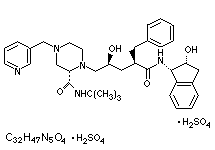
Indinavir (Sulphate) is a protease inhibitor with antiretroviral activity. Indinavir (Sulphate) is used in combintion with other antiretroviral agents for the treatment of HIV infection and with advanced ae progressive immunedefiency.
Primary Characteristics
Indinavir (Sulphate) is also known as Sulfatoindinavir.
It is of Synthetic origin and belongs to Indanes, pherylpropylamine.
Molecular Weight: 711.9 · pKa: 6.2 · Solubility in Water: > 1 in 10 · Non-proprietary name: Indinavir (Sulphate).
Pharmacokinetics
Absorption: Indinavir (Sulphate) has an oral bioavailability is 19% (±1%).
Distribution: Indinavir (Sulphate) has a volume of distribution is 2.8. plasma protein binding is 60%.
Elimination: plasma half-life is 1.8±0.4 hr, renal excretion is < 20% (unchanged/Metabolites).
Advertisement
Indications
Indinavir (Sulphate) is primarily indicated in conditions like AIDS, HIV infection.
Indinavir (Sulphate) is also indicated for secondary conditions like Prophylaxis after occupational exposure to HIV.
Contraindications
Indinavir (Sulphate) is contraindicated in conditions like Diabetes mellitus, Haemophilia, Hypersensitivity.
Dosage
Indinavir (Sulphate)'s dosage details are as follows:
| Dose | Single Dose | Frequency | Route | Instructions |
|---|---|---|---|---|
| Adult Dosage | ||||
| 500 mg | 500 mg | Every 8h | Adolescence | |
| 600 mg | 600 mg | Every 8h | Hepatic insuffiency | |
| 800 mg | 800 mg | Every 8h | PO | |
| Paediatric Dosage (20kg) | ||||
| 500 mg/m2 | 500 mg/m2 | Every 8h | PO | child under 4 year safety not establish |
| 800 mg/m2 | 800 mg/m2 | Every 8h | PO | Child 4-7 year, |
| Neonatal Dosage (3kg) | ||||
| No data. | ||||
Drug Interactions
Always consult your physician for the change of dose regimen or an alternative drug of choice that may strictly be required.
Side Effects
Indinavir (Sulphate) in overdosage may give rise to further complications which include Nausea , Vomiting , Anorexia , Hyperglycemia , Diarrhea, Renal stones , Hyperglycemia, Renal insufficiency, Diabetes mellitus.
Indinavir (Sulphate) produces potentially life-threatening effects which include Anemia, Thrombocytopenia , Bleeding , Anemia, Skin hematomas, Acute hemolytic anemia, Hemarthrosis, Hemarthrosis. Careful monitoring is needed with proper medical management.
Indinavir (Sulphate) is known to cause more or less tolerable side effects which are usually transient. These include Abdominal distension, Acute renal failure, Crystalluria , Hematuria, Hepatic failure, Hepatitis, Hyperbilirubinemia, Hypercholesterolemia, Hyperpigmentation , Hypertriglyceridemia, Liver dysfunction, Nephrolithiasis including flank pain, Proteinuria , Weight LossX.
Warnings / Precautions
Interference in Pathology
Indinavir (Sulphate) may interfere in the diagnosis of Increased serum cholesterol, Increased serum triglycerides.
Available Brands
None recorded.
Storage Conditions
Drug Classification
- 1.6.5.2 — Antiretroviral drugs